
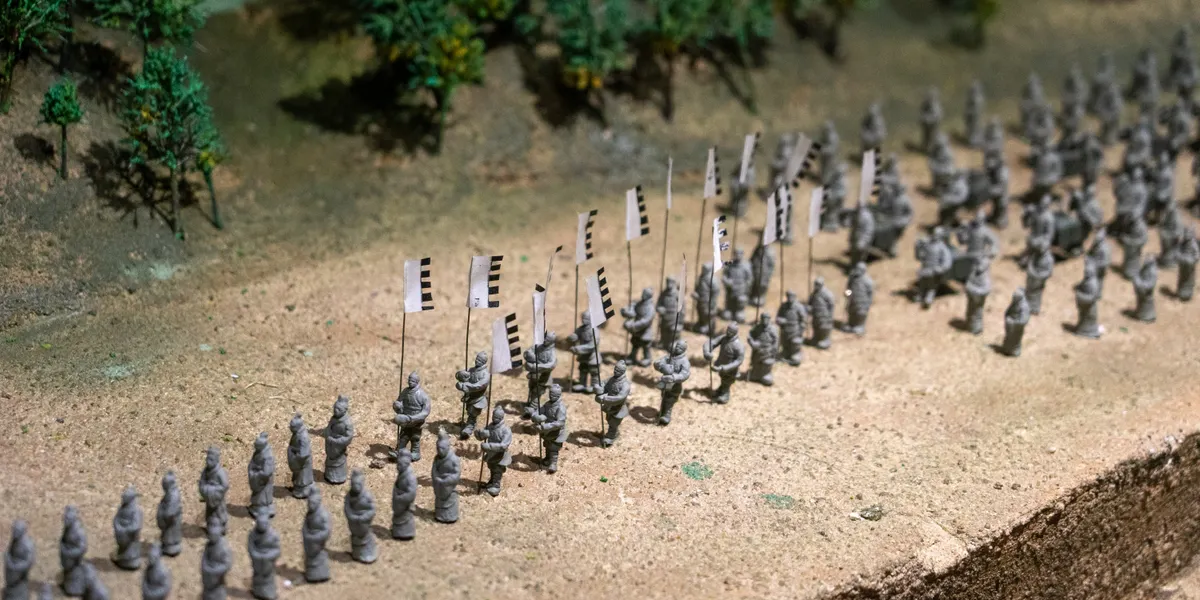
Historical wargaming means real armies from real wars, painted and played on the tabletop. Starting comes down to three choices, in this order: the period you want to collect, the scale of the figures, and the rules. Many beginners start with the Second World War at 28mm with Bolt Action, or at 15mm with Flames of War, because both have ready-made starter boxes.
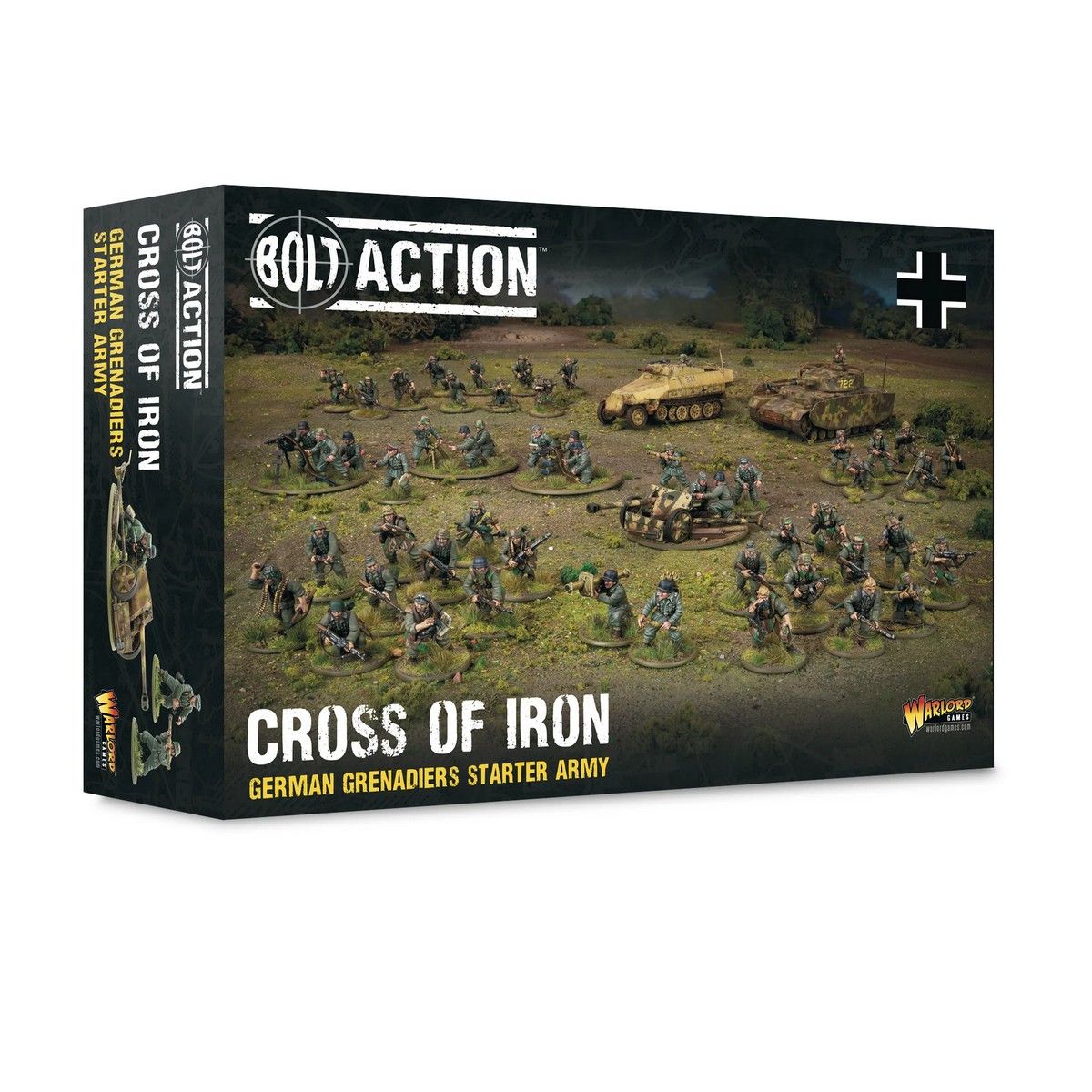
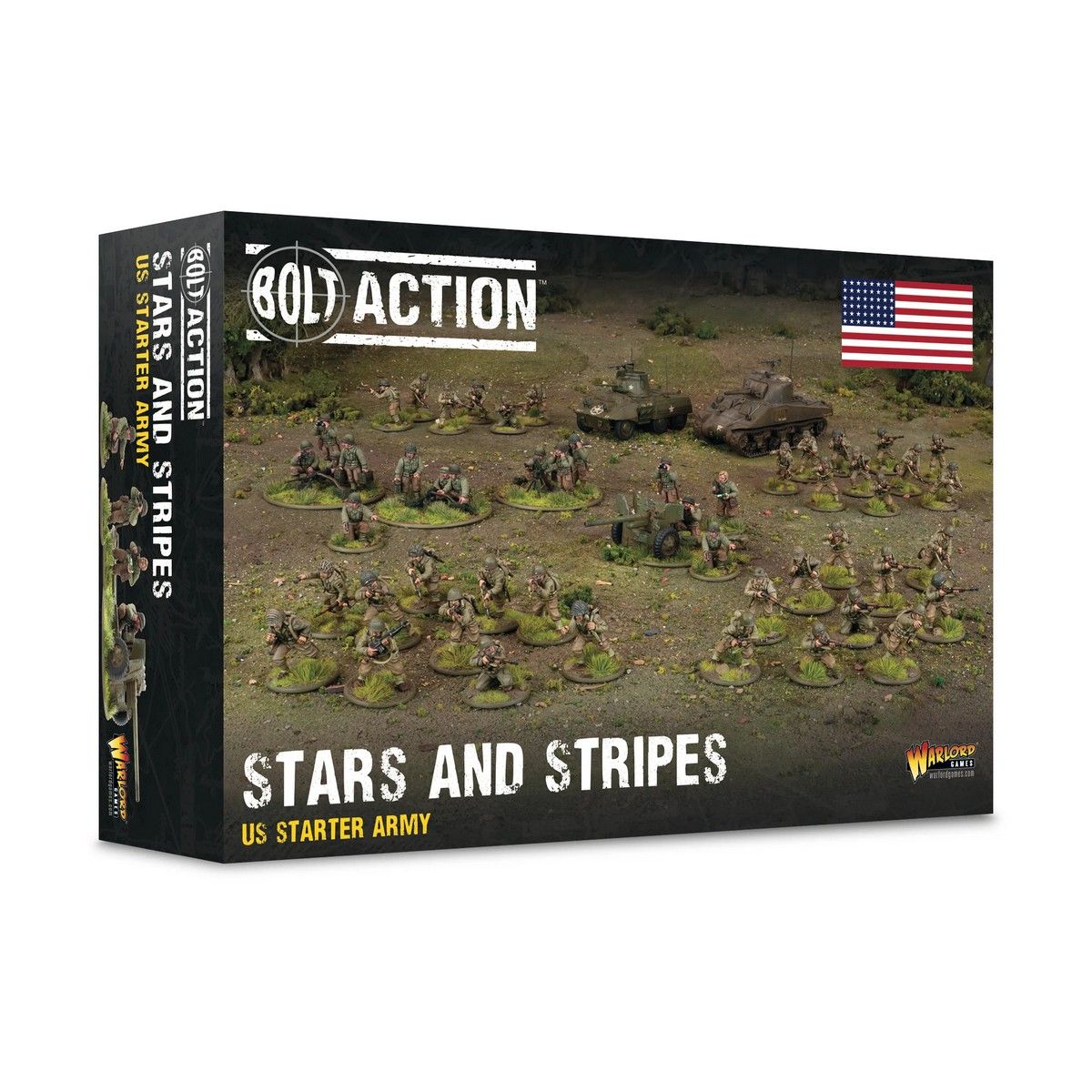

In this edition Bolt Action is well stocked and Hail Caesar has a good range, with a little Black Powder. Flames of War and Team Yankee have nothing a shop here sells through us yet, so the 15mm games below are hard to buy from this edition today.
In short:
- Period first: the Second World War has the most rules, figures and starter boxes, which makes it the usual place to start.
- Then scale: 28mm for detail and platoon battles (Bolt Action), 15mm for whole tank companies (Flames of War), 13.5mm and smaller for very big battles.
- Then rules: each scale and period has a ruleset with a starter box; the rules section below matches them up.
Which period
Pick the period you find most interesting. You will read about it, paint its uniforms and build its armies, so curiosity is what keeps a project going.
WW2 miniatures: the Second World War
By far the most popular period, with the most choice of rules, figures and scales. Bolt Action fights at platoon level at 28mm: a few squads of infantry with support weapons and a vehicle or two. Flames of War fights at company level at 15mm, so whole tank companies fit on the table. Our Bolt Action starter armies guide covers which nation and box to buy first, and the Bolt Action paints guide gives the uniform colours.
Other WW2 rulesets you will hear about, such as Too Fat Lardies' Chain of Command and What a Tanker, are played with the same figures. For an alternate-history war with walkers and strange science, there is Konflikt '47.
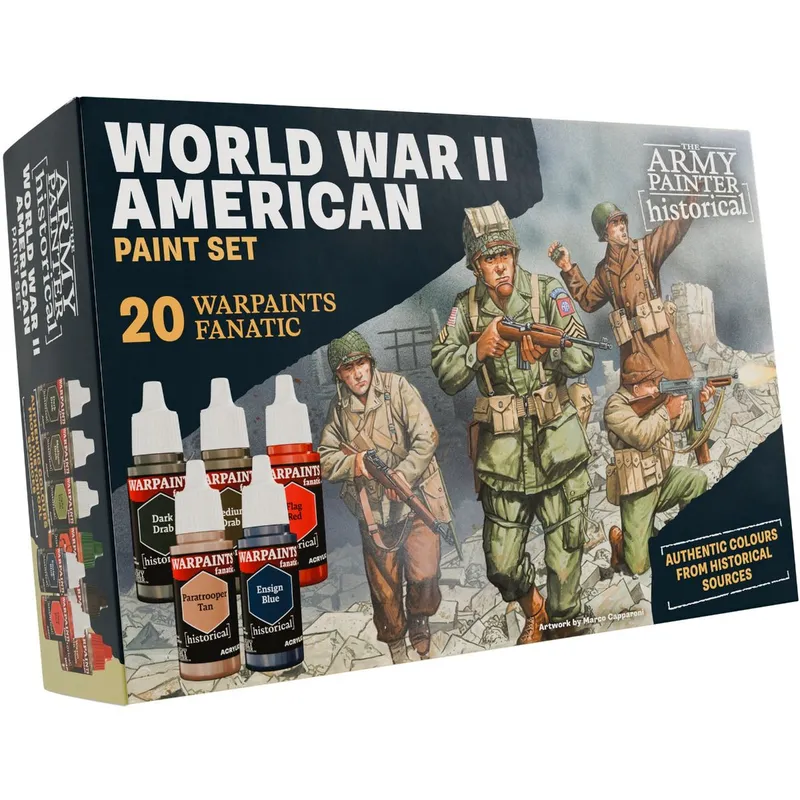
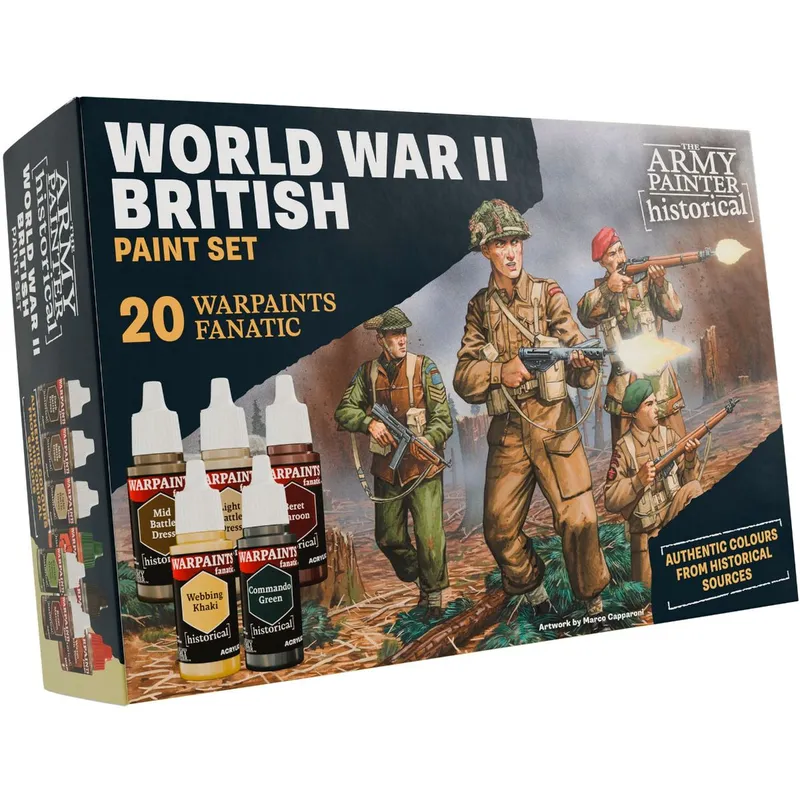
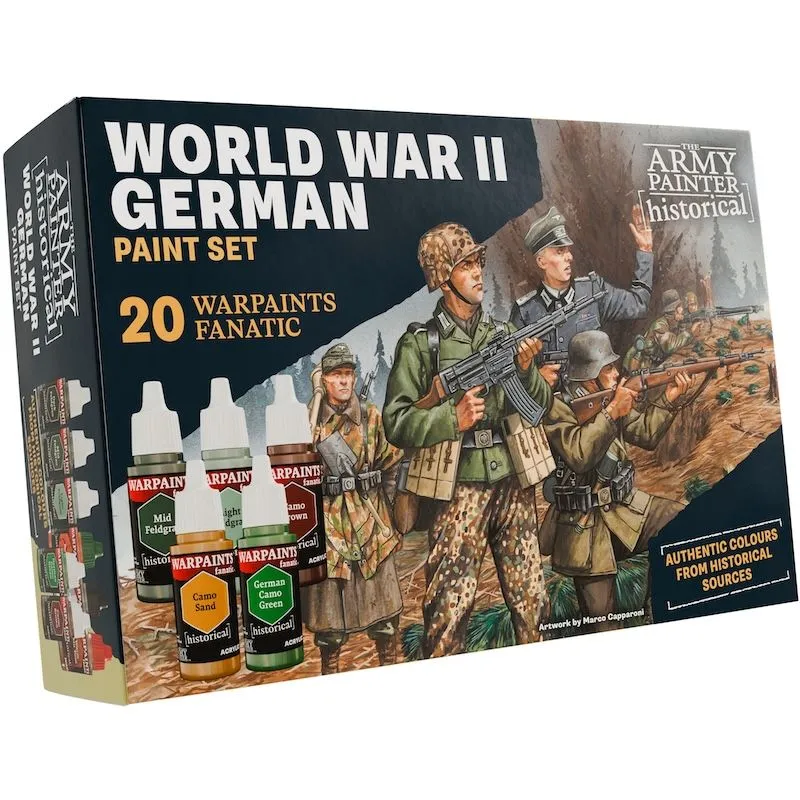
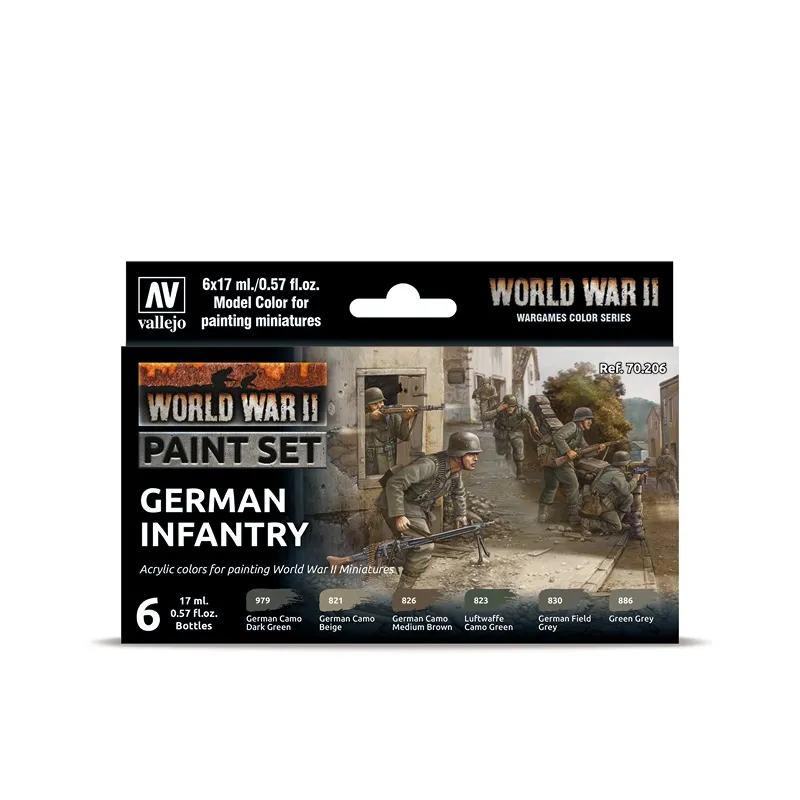
Painting a WW2 army is mostly uniforms and vehicles in a few drab colours, so a nation's paint set covers most of a first force. Army Painter's WWII sets are matched to the American, British and German armies; Vallejo's German infantry set is the same idea in Model Color.
Napoleonic miniatures and horse and musket
Line infantry, cavalry charges and artillery, from the eighteenth century to the end of the nineteenth. Black Powder covers 1700 to 1900, including the Napoleonic Wars and the American War of Independence. Perry Miniatures make a large range of plastic and metal figures for these wars.
Two ways in: a Perry skirmish box of 28mm figures, or a Black Powder Epic Battles brigade at 13.5mm, which puts a whole brigade on the table from one box.
Ancients and medieval
Roman legions, Carthaginian elephants, medieval knights and longbowmen. Hail Caesar covers ancient and medieval battles in one set of rules. Its Epic Battles boxes for the Punic Wars give each side an army or a division from one box:
Pike and shot
The sixteenth and seventeenth centuries, including the English Civil War and the Thirty Years' War, are covered by Pike & Shotte.
The Cold War and the First World War
Team Yankee imagines the Cold War turning hot in the 1980s, with modern tanks at 15mm; the Fulda Gap Starter Set is a starter set for it. The First World War and the other kits not filed under one ruleset are on the historical miniatures page.
Which scale
A figure's scale in millimetres is roughly the height of a man from foot to eye. Vehicles are made to a matching ratio. The same period can be played at several scales, and the choice decides what a battle looks like.
| Scale | Vehicle ratio | Best for | Games we price |
|---|---|---|---|
| 28mm | about 1:56 | Skirmishes and platoon battles; the most detail to paint | Bolt Action, Konflikt '47, Perry Miniatures |
| 20mm | 1:72 | Plastic soldiers and WW2 skirmishes | Little at this scale yet |
| 15mm | 1:100 | Company battles with many tanks | Flames of War, Team Yankee |
| 13.5mm | Big horse and musket or ancient battles | Warlord's Epic Battles boxes for Black Powder and Hail Caesar | |
| 10mm and 6mm | Very large battles on a normal table | A few boxes |
28mm is the scale most people picture, and the same size as most Warhammer figures, so your painting skills carry over directly. Bolt Action vehicles are made at 1:56 to match. If you have never painted, how to start painting miniatures covers the first figures.
20mm, the same as 1:72, is the classic scale of boxed plastic soldiers and is popular for WW2 skirmish games. We price few 20mm figures today.
15mm, matched to 1:100 vehicles, puts many more models on the same table. Flames of War is the best-known 15mm game, and a tank company at this scale costs less and paints faster than the same force at 28mm.
Smaller scales (13.5mm, 10mm and 6mm) are for whole armies on the table: Warlord's Epic Battles boxes fill a table with regiments for the cost of a few 28mm units. Painting at this size is its own skill; our small-scale painting guide covers the batch methods.
Mixing scales does not work on one table, so pick one per period and stick with it. Makers' figures also vary within a scale, so check pictures before mixing two makers in one unit.
Which rules to start with
- WW2 at 28mm: Bolt Action. Buy a Starter Army for the nation you like, or the two-player Starter Set if you are learning with a friend.
- WW2 at 15mm: Flames of War. Its starter sets hold two forces and the rules.
- Napoleonic: Black Powder, with Perry Miniatures plastics at 28mm or the Epic Battles boxes at 13.5mm.
- Ancients and medieval: Hail Caesar, with its Epic Battles boxes as a quick way to two armies.
Want something other than history? Our games like Warhammer guide covers the fantasy and science fiction wargames we price.
What scale is Bolt Action?
Bolt Action uses 28mm figures, with vehicles at 1:56 to match.
What scale is Flames of War?
Flames of War uses 15mm figures, with vehicles at 1:100.
Which scale should I choose for WW2 miniatures?
28mm if you want the most detail and platoon battles with Bolt Action, 15mm if you want whole tank companies with Flames of War, and 20mm (1:72) for boxed plastic soldiers. Choose the rules you want to play first, then buy figures at their scale.
Is 20mm the same as 1:72?
Yes, near enough. 20mm figures and 1:72 kits are made to work together, and the scale is a long-standing favourite for plastic soldiers and WW2 skirmish games.
What is the best historical period for beginners?
The Second World War, because it has the most starter boxes, figures and rules to choose from. The best period is still the one you find most interesting.
Do I need to know a lot of history to start?
No. Starter boxes come with the forces and the rules to use them, and most players read up on their army as they paint it.
The prices on this page come from the shops we compare, and each game's own page lists every box and kit we price for it.