
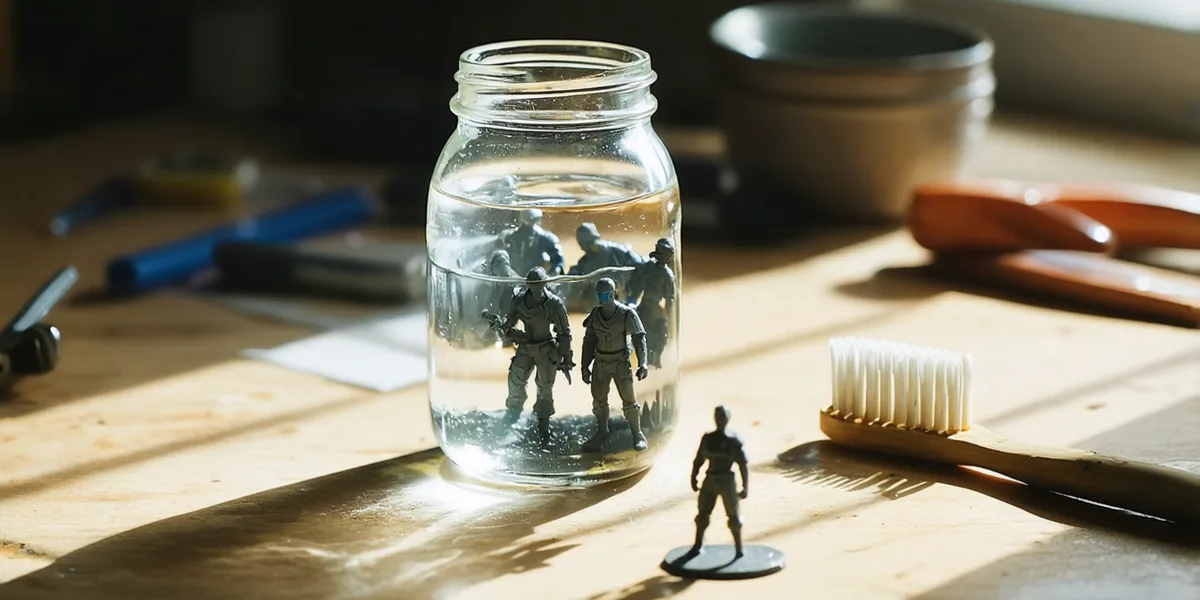
Stripping paint off a miniature gives you a second chance: a second-hand army painted thick, a model whose primer went gritty, a scheme you no longer like. The method is the same for all of them. Soak the model in something that softens the paint, scrub it off, rinse, and prime again. What changes is which soak is safe for which material.
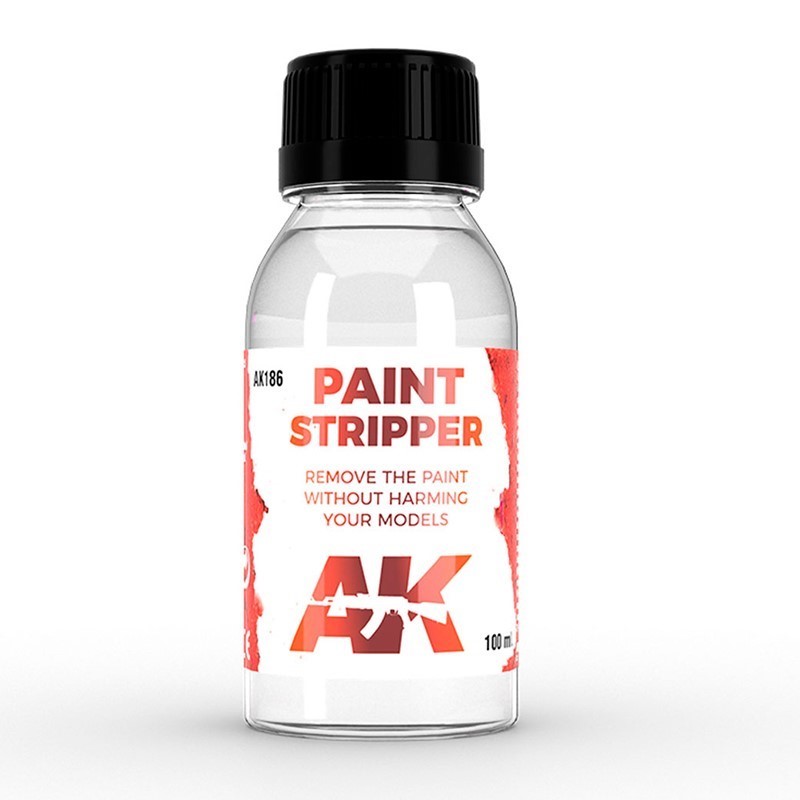
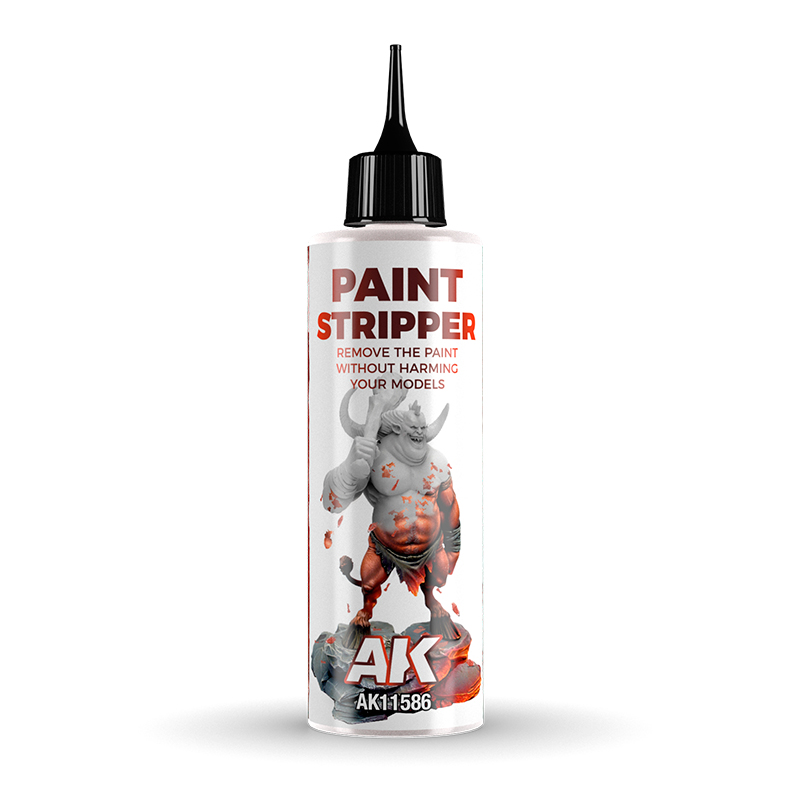
Hobby paint strippers are made for the job and are the predictable choice. The ones sold by shops we track in your market, with prices:
First: what is the model made of?
- Hard plastic (polystyrene). Games Workshop, Warlord, Mantic and most modern wargaming plastic kits. Tolerant of most hobby strippers and of isopropyl alcohol. Melts in acetone and strong solvents.
- Resin. Forge World, many small makers, and 3D prints. More sensitive than plastic: some resins go soft, sticky or brittle in strong solvents or long soaks. Test on a hidden part or a spare piece first.
- Metal (white metal or pewter). Old Citadel, Reaper metal, many historicals. Survives almost anything, including strong solvents.
- Soft plastic and "Bones"-type materials. Reaper Bones and some board game figures. These can react badly to solvents; many painters use a gentle stripper and a short soak only.
If you do not know, treat it as the most sensitive likely material and test a small area first.
The strippers, and what each is safe on
Hobby paint strippers, such as AK Interactive's, are sold to remove model paint from plastic, resin and metal. Follow the maker's instructions for soak time. They are the least likely to surprise you on an unknown material.
Isopropyl alcohol (IPA), at 90 per cent or stronger, is the most common household option for acrylic paint on hard plastic and metal. It is cheap, works in hours rather than days, and evaporates without residue. It is flammable and the fumes are strong, so use it in a ventilated room with a lid on the container. On resin, test first.
Simple Green and similar degreasers are a gentler, slower option many painters use on plastic and resin. Expect an overnight or longer soak.
Things to avoid on plastic: acetone, nail-polish remover and cellulose thinners, which melt or craze polystyrene. Brake fluid and oven cleaner do strip paint, but they are corrosive and hazardous to you, so a hobby stripper or IPA is the safer choice on any material.
How to strip a miniature, step by step
- Take it apart if you can. Magnetised arms, loose bases and anything only lightly glued come off; stripping is easier in pieces. Note that some strippers soften plastic glue joints too.
- Put the model in a glass jar or a plastic tub with a lid, and cover it with the stripper.
- Soak. An hour or two in IPA is often enough for fresh acrylic; old or varnished paint may need overnight. Follow the maker's time for a hobby stripper.
- Scrub with an old toothbrush, wearing gloves, working the softened paint out of the detail. Re-soak and repeat for stubborn areas.
- Pick out the last paint from deep recesses with a toothpick or a stiff brush.
- Rinse in warm, soapy water and let the model dry fully before priming. Any stripper left on the surface stops primer gripping.
An ultrasonic cleaner speeds up the scrubbing stage a great deal: it shakes the softened paint out of the recesses while the model sits in the bath. Use only a non-flammable stripper or water-based degreaser in the tank itself. To use IPA, put it in a sealed jar with the models and stand the jar in water in the tank.

Ultrasonic wash station for resin prints
UniFormation
After stripping
- Check for damage. Look for softened detail, crazing or bent thin parts before priming.
- Re-prime properly. Stripped plastic can keep traces of stripper. Wash well, dry overnight, and prime with thin coats. See the brush-on primer guide or the spray primer guide.
- Do not worry about the odd fleck of old paint in a deep recess. Primer and a basecoat will hide it.
Questions people ask
What is the best paint stripper for miniatures? A hobby stripper sold for the job, such as AK Interactive's, if a shop near you sells it. Otherwise isopropyl alcohol at 90 per cent or more, for acrylic paint on hard plastic and metal.
Is isopropyl alcohol safe on plastic miniatures? Hard polystyrene kits generally tolerate it well. Resin and soft plastics can react, so test first and keep soaks short.
How long should I soak miniatures to strip them? From an hour to overnight, depending on the stripper and how old and thick the paint is. Check every hour or so the first time.
Can I strip primer as well as paint? Yes, the same way, though some primers take a longer soak than paint.
Will stripping remove the glue? Some strippers soften plastic glue and superglue joints. Expect to re-glue some parts; the plastic glue guide covers which glue suits which material.
Paint strippers for miniatures
A hobby stripper and an old toothbrush are all most stripping jobs need.
We earn a small commission from qualifying purchases at no extra cost to you.