
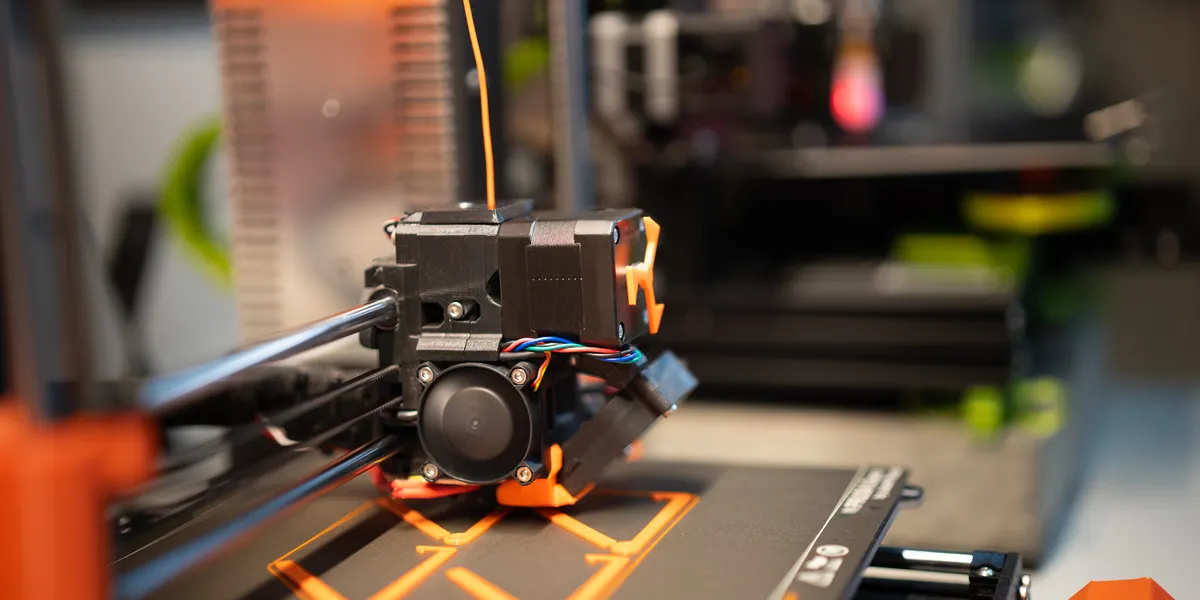
On an open printer, choose PETG. It is tougher than PLA, copes with more heat, and neither of the makers we cite asks for an enclosure. Choose ABS when a part needs more impact strength and heat resistance than PETG gives, and you have an enclosed printer to print it in. These are 1 kg spools of each, in grey and black, the neutral colours for anything you will prime and paint, from brands several of the shops we track sell:

PETG filament: tougher and more heat-tolerant than PLA, easy to print · 1kg
SUNLU

PETG filament: tougher and more heat-tolerant than PLA, easy to print · 1kg
ELEGOO

PETG filament tuned for high-speed printers · 1kg
ELEGOO

ABS filament: tougher and more heat-resistant than PLA, needs a heated bed and ideally an enclosure · 1kg
ELEGOO
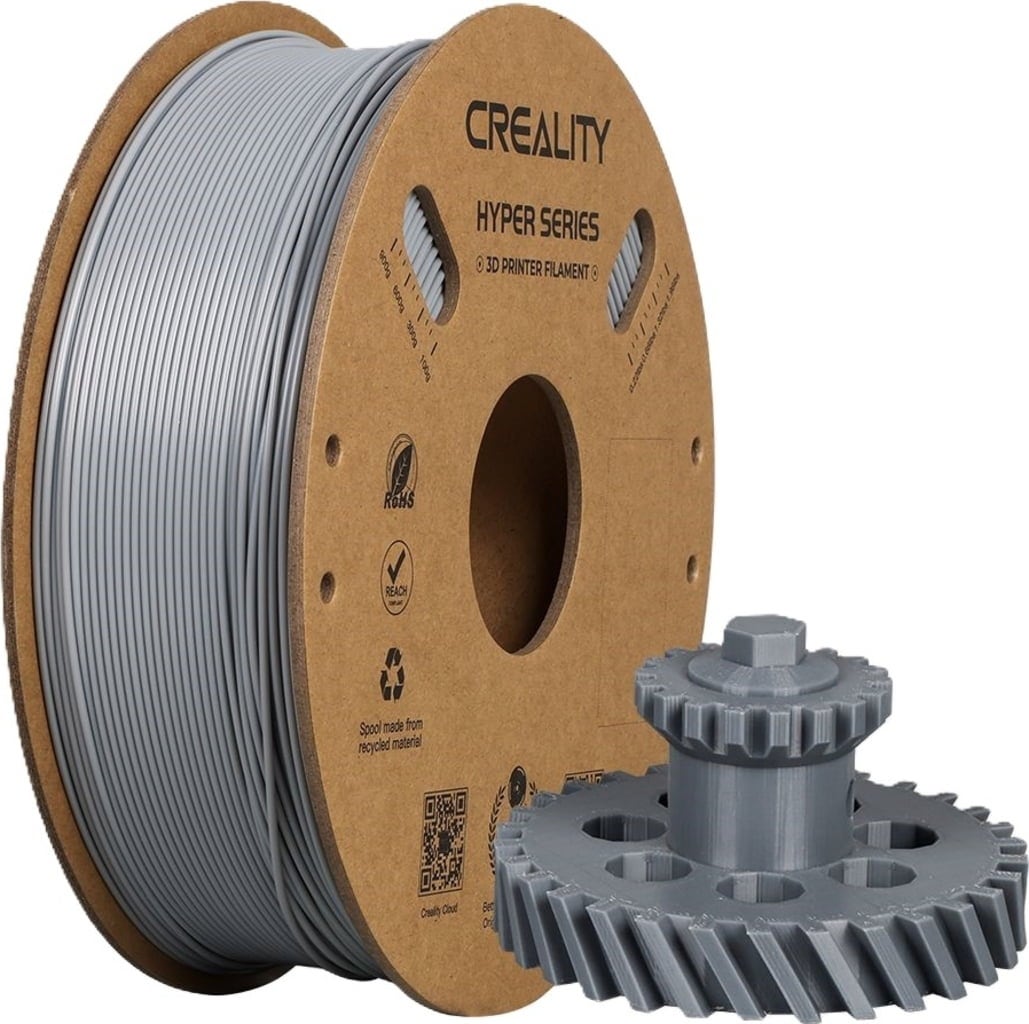
ABS-family filament: tougher and more heat-resistant than PLA, needs a heated bed and ideally an enclosure · 1kg, 1.75 mm
Creality

ABS filament: tougher and more heat-resistant than PLA, needs a heated bed and ideally an enclosure · 1kg
SUNLU
Every spool is on the PETG filament page and the ABS and ASA shelf, priced per kilo in your currency. Settings for sixteen filaments are side by side in our filament temperature chart.
PETG vs ABS at a glance
| PETG | ABS | |
|---|---|---|
| Nozzle temperature (eSUN) | 240-260 °C | 255-275 °C |
| Bed temperature (eSUN) | 75-90 °C | 95-110 °C |
| Part cooling fan (eSUN) | 100% | Off |
| Enclosure | Not listed: eSUN asks for a heated bed only | eSUN: enclosed-chamber printing; Prusa: "should be inside an enclosure" |
| Heat distortion (eSUN) | 64 °C | 78 °C |
| Impact strength, Izod (eSUN) | 4.9 kJ/m² | 26.5 kJ/m² |
| Fumes | Not raised by either maker | Prusa lists "toxic fumes" as a main disadvantage |
| Smoothing | Sands wet or dry (Prusa) | Sands wet or dry, smooths with acetone vapour (Prusa) |
| Drying | 55 °C for 6 hours (Prusa) | Not stated by either maker |
| Best for | Club terrain, case inserts, racks and storage on an open printer | Hard-wearing, heat-tolerant parts on an enclosed printer |
The figures are from eSUN's PETG and ABS product pages, and from Prusa's PETG and ABS articles and its drying table. Your spool's label is the setting to start from.
Why PETG suits most tough jobs
PETG prints on the same open printer you use for PLA, a little hotter and on a hotter bed. Prusa describes it as "especially suitable for mechanical parts for both indoor and outdoor use", and fit for most exterior use below 80 °C. For a wargamer that covers club terrain that travels every week, foam-tray replacements and carry-case inserts, paint racks and storage that sits on a sunny windowsill.
It strings more than PLA. Prusa tunes it with retraction and the part fan: first layers with the fan off, then the fan at about half. On a smooth PEI sheet it can bond so well it damages the sheet, so print it on textured PEI or over a thin layer of glue stick; our textured vs smooth PEI guide explains.

High-flow PETG filament for fast printers: tougher and more heat-tolerant than PLA · 1kg
ELEGOO
PETG filament tuned for high-speed printers · 1kg
ELEGOO
PETG filament: tougher and more heat-tolerant than PLA, easy to print · 1kg
SUNLU
Where ABS pulls ahead
On eSUN's own measurements, its ABS has roughly five times the Izod impact strength of its PETG and a heat distortion temperature of 78 °C against 64 °C. Prusa calls ABS "tenacious and high-temperature resistant" and recommends it for technical parts needing "good heat and mechanical resistance". Clips, hinges and case hardware that get stressed every game night, or parts left in a hot car, are where that shows.
ABS also smooths with acetone vapour into a glossy finish, which PETG does not.
ABS filament: tougher and more heat-resistant than PLA, needs a heated bed and ideally an enclosure · 1kg
ELEGOO
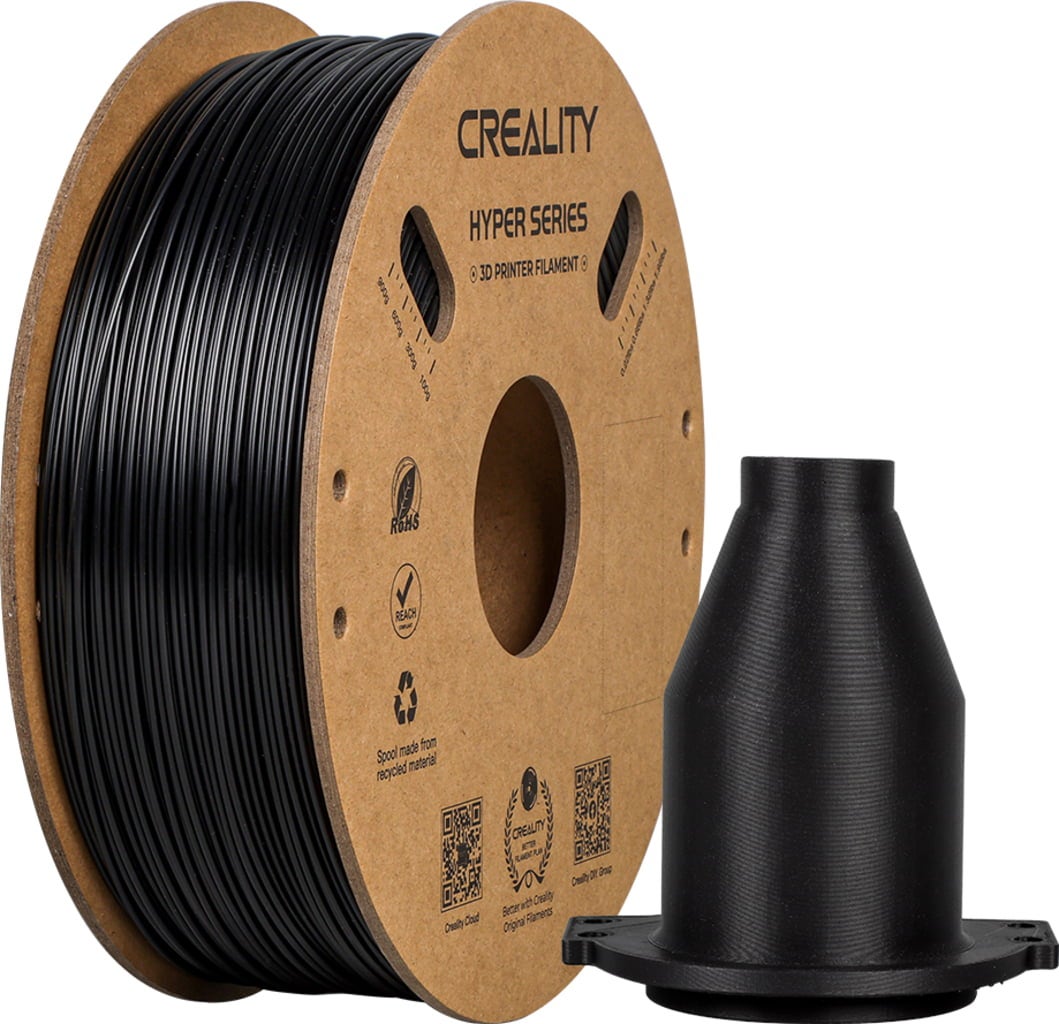
ABS-family filament: tougher and more heat-resistant than PLA, needs a heated bed and ideally an enclosure · 1kg, 1.75 mm
Creality

ABS filament: tougher and more heat-resistant than PLA, needs a heated bed and ideally an enclosure · 1kg
QIDI Tech
The enclosure decides it
ABS warps as it cools. eSUN's printing recommendation for it is enclosed-chamber printing with the part fan off, and Prusa says the printer should sit in an enclosure, in a well-ventilated room because of the fumes. On an open printer, large ABS prints lift at the corners and crack between layers. PETG needs none of that, which is why it is the usual pick for durable terrain and storage at home.
If you do want ABS on an open printer, an enclosure is the thing to buy first: usually a fold-up tent that sits over the whole machine (see do you need a 3D printer enclosure). Measure the printer, including the spool holder and the bed's full travel, before choosing a size.

3D printer enclosure · Small
Creality

3D printer enclosure
Creality

Fabric tent enclosure that goes over a 3D printer to hold temperature and keep dust off; LED light · S0001 · 600D Oxford cloth, inner composite aluminium film · 550 x 650 x 750 mm (L x W x H) · 3DDYJZRTWQWTKNHKO001V9 · 197988907336
VEVOR

Fold-up enclosure tent that keeps heat in and draughts out for ABS/ASA printing on a Neptune · Fits Neptune 2/2D/2S/3/3 Pro/4/4 Pro
ELEGOO
If you do have an enclosure and want ABS's toughness for something that also sits in the sun, look at ASA: see ASA vs ABS.
Painting PETG and ABS
Both take acrylic paint over a primer made for plastics. PETG's surface is glossy, so let the primer cure fully before handling. Our spray primer guide compares the cans.
To see what a carry-case insert or a terrain piece costs in either material, our 3D print cost calculator prices it from the spools sold in your region.
Other filament comparisons
- PETG vs PLA: which of the two open-printer filaments for terrain
- PLA vs ABS: the easy filament against the tough one
- PLA vs PLA+: what the plus buys you
- ASA vs ABS: the UV-resistant successor to ABS
Questions
Is PETG or ABS stronger?
ABS is tougher. On eSUN's own figures its Izod impact strength is about five times that of its PETG, and it holds its shape at higher temperatures. PETG is still much tougher than PLA, and easier to print than ABS.
Does PETG need an enclosure?
Neither eSUN nor Prusa asks for one. eSUN lists only a heated bed for PETG, where for ABS it recommends enclosed-chamber printing.
Which is better for a carry case or foam-tray inserts?
PETG for most people, because it is tough enough and prints on an open printer. ABS if you have an enclosure and the parts will be stressed or kept somewhere hot.
What temperatures do PETG and ABS print at?
On eSUN's figures, PETG at 240-260 °C on a 75-90 °C bed, and ABS at 255-275 °C on a 95-110 °C bed with the part fan off.
We compare the makers' published settings and the prices at the shops we track; we have not printed with these spools ourselves.