 PLA
£7.99 per kg · PLA filament: the easiest material for terrain, scenery, props and display pieces · 1kg
Anycubic
 HobbySupermarket
Nozzle, bed and drying temperatures for 16 filaments, with fan and enclosure settings, from the makers' own published figures. Spools priced per kilo at the shops we track in the UK.
PLA£7.99 per kg · PLA filament: the easiest material for terrain, scenery, props and display pieces · 1kg
Anycubic
 PETG
£7.99 per kg · PETG filament: tougher and more heat-tolerant than PLA, easy to print · 1kg
Anycubic
 PLA+ / PLA Pro
£11.20 per kg · A single 5kg large-format spool of Rapid PLA+ (made for the OrangeStorm Giga) · 5kg spool
ELEGOO
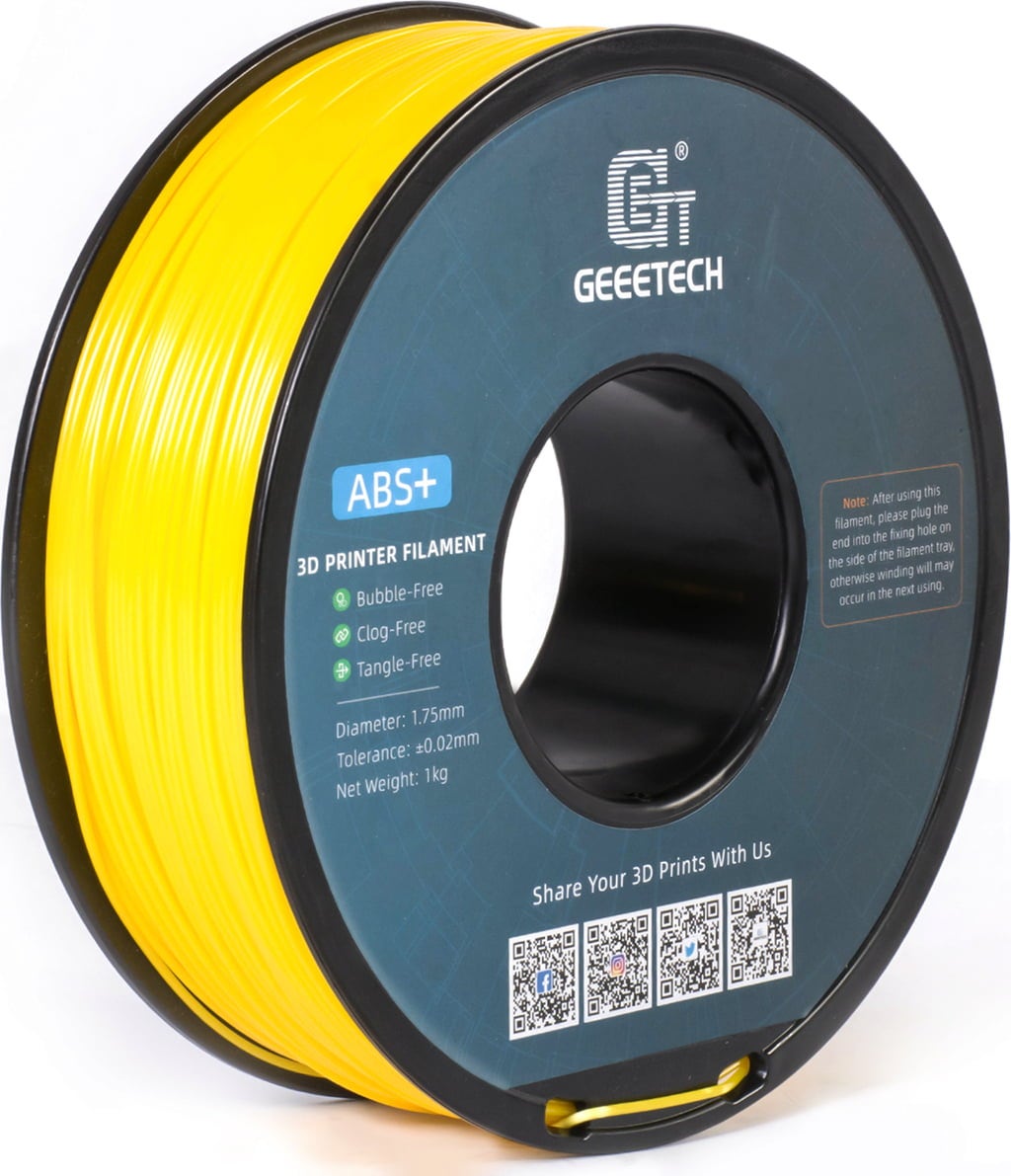 ABS
£12.41 per kg · ABS/ASA-family FDM filament: tougher and more heat-resistant than PLA, 1.75 mm · 1kg
GEEETECH
 ASA
£13.99 per kg · UV- and weather-resistant ASA filament for outdoor parts · 1kg
ELEGOO
 TPU
£15.99 per kg · Flexible TPU 95A filament · 1kg
ELEGOO
Thin supply in the UK: the shops we track price fewer than 5 spools of PVA (water-soluble support). The settings below still apply wherever you buy.
| Filament | Nozzle | Bed | Drying | Enclosure | Part fan | Heat distortion | Spools in the UK |
|---|---|---|---|---|---|---|---|
| PLAeSUN, Prusa | 210-230 °C | 45-60 °C | 45 °C for 6 h | Not listed (heated bed only) | Fan 100% | 54 °C | From £7.99/kg944 priced here |
| PLA+ / PLA ProeSUN | 210-230 °C | 45-60 °C | 50 °C for 8-12 h | Not listed (heated bed only) | Fan 100% | 54 °C | From £11.20/kg510 priced here |
| Matte PLAeSUN | 190-230 °C | 45-60 °C | – | Not listed (heated bed only) | Fan 100% | 51 °C | From £11.95/kg398 priced here |
| Silk PLAeSUN | 190-230 °C | 45-60 °C | – | Not listed (heated bed only) | Fan 100% | 50 °C | From £11.91/kg361 priced here |
| Specialty PLA (wood, metal and other fills)Prusa | 190-270 °C, by filament | 60-100 °C, by filament | 45 °C for 6 h (Prusament Woodfill) | – | – | – | From £10.29/kg422 priced here |
| PETGeSUN, Prusa | 240-260 °C | 75-90 °C | 55 °C for 6 h | Not listed (heated bed only) | Fan 100% | 64 °C | From £7.99/kg858 priced here |
| ABSeSUN, Prusa | 255-275 °C | 95-110 °C | – | Yes (enclosed chamber) | Fan off | 78 °C | From £12.41/kg213 priced here |
| ASAeSUN, Prusa | 250-280 °C | 90-110 °C | 80 °C for 4 h | Yes (enclosed chamber) | Fan 0-30% | 96 °C | From £13.99/kg158 priced here |
| TPUeSUN, Prusa | 220-250 °C | 45-60 °C | 60 °C for 4-6 h | Not listed (heated bed only) | Fan 100% | – | From £15.99/kg167 priced here |
| Other flexibles (TPE, TPC, PEBA)Prusa | 230-245 °C | 60-75 °C | – | – | Fan off | – | From £37.00/kg53 priced here |
| Carbon and glass fibre filledPrusa | 240-285 °C, by base polymer | 70-110 °C, by base polymer | – | – | – | – | From £16.99/kg237 priced here |
| Nylon (PA)eSUN | 250-290 °C | 70-90 °C | 70 °C for over 12 h | Yes (enclosed chamber) | Fan off | 100 °C | From £34.00/kg25 priced here |
| Polycarbonate (PC)Prusa | 275 °C | 110-115 °C | 85 °C for 5 h (PC Blend) | Helps | – | – | From £25.76/kg39 priced here |
| PVA (water-soluble support)eSUN | 180-230 °C | 45-60 °C | 45 °C for over 10 h | – | Fan 100% | – | From £64.00/kg2 priced here (thin) |
| PVBPrusa | 205-225 °C | 75 °C | 45 °C for 8 h | – | – | – | From £36.00/kg7 priced here |
| HIPSeSUN, Prusa | 230-270 °C | 100-115 °C | – | Yes (enclosed chamber) | Fan off | 80 °C | From £17.45/kg12 priced here |
Ranges are each maker's published figures for its own line, named under each filament and listed in full under Sources. A dash means neither maker we cite publishes that figure, so we leave it out rather than guess. Heat distortion is eSUN's measured figure: roughly the temperature at which a printed part starts to sag under load.
Start from the label on your spool. Makers tune their own blends, so the same material can print 10 to 20 °C apart between brands, and even between colours of one line. The ranges here tell you where a material sits; within a range, print hotter for stronger layers and cooler for sharper detail and less stringing. A temperature tower, a short test print that steps the nozzle temperature every few millimetres, finds the best setting for one spool on one printer.
For terrain, bases and scenery, PLA and PETG cover most jobs on an open printer. ABS, ASA, nylon and HIPS warp as they cool, which is why eSUN recommends an enclosed chamber for each. Dry a spool at no more than the temperature in the drying column: hotter and the filament softens and sticks to itself on the spool. Our filament dryer guide compares the dryers that reach each temperature.
Working out what a print costs? The 3D print cost calculator prices the filament from spools in your market.
Nozzle 210-230 °C · bed 45-60 °C · dry at 45 °C for 6 h
Most terrain, scatter, bases and display pieces: the easiest filament to print.
944 spools priced in the UK · PETG vs PLA · PLA vs ABS · PLA vs PLA+
Nozzle 210-230 °C · bed 45-60 °C · dry at 50 °C for 8-12 h
Terrain that gets handled: thin spires, railings and gantries that plain PLA might snap.
Nozzle 190-230 °C · bed 45-60 °C
Terrain you will paint: the flat surface shows layer lines less under a thin coat.
Nozzle 190-230 °C · bed 45-60 °C
Display pieces left unpainted: objective markers, trophies, plinths.
Nozzle 190-270 °C, by filament · bed 60-100 °C, by filament · dry at 45 °C for 6 h (Prusament Woodfill)
Crates, barrels and planking in wood-fill; glow and marble finishes for markers and display bases.
Nozzle 240-260 °C · bed 75-90 °C · dry at 55 °C for 6 h
Club terrain, carry-case inserts, paint racks and anything handled or packed often.
Nozzle 255-275 °C · bed 95-110 °C
Tough, heat-tolerant parts and pieces you want to vapour-smooth; needs an enclosed printer.
213 spools priced in the UK · PLA vs ABS · PETG vs ABS · ASA vs ABS
Nozzle 250-280 °C · bed 90-110 °C · dry at 80 °C for 4 h
Terrain and storage that sit in sun or heat: garden gaming tables, windowsill displays.
Nozzle 220-250 °C · bed 45-60 °C · dry at 60 °C for 4-6 h
Banners, cables, tank tracks, flexible bases and soft tray liners.
Nozzle 230-245 °C · bed 60-75 °C
Soft, grippy parts: feet for terrain boards, bumpers, hinges that bend.
Nozzle 240-285 °C, by base polymer · bed 70-110 °C, by base polymer
Stiff functional parts: hobby jigs, display stands, brackets. Not for fine detail.
Nozzle 250-290 °C · bed 70-90 °C · dry at 70 °C for over 12 h
Hard-wearing functional parts: hinges, clips and tool holders for the hobby desk.
Nozzle 275 °C · bed 110-115 °C · dry at 85 °C for 5 h (PC Blend)
Parts that must take heat and load; rarely needed for terrain.
Nozzle 180-230 °C · bed 45-60 °C · dry at 45 °C for over 10 h
Supports that wash away in water, for a second extruder printing PLA.
Nozzle 205-225 °C · bed 75 °C · dry at 45 °C for 8 h
Clear pieces smoothed glassy with alcohol: crystals, gems and energy effects.
Nozzle 230-270 °C · bed 100-115 °C
Supports that dissolve in limonene; light, cheap prints.
eSUN publishes 210-230 °C at the nozzle and a 45-60 °C bed for its PLA-Basic; Prusa sets its own PLA at 215 °C for the first layer and 210 °C after, on a 60 °C bed. Start from the figure on your spool label and adjust in 5 °C steps.
eSUN publishes 240-260 °C at the nozzle and a 75-90 °C bed for its PETG. Prusa runs its own PETG at 230 °C for the first layer and 240 °C after, on an 85-90 °C bed, with the part fan on after the first layers.
It depends on the material. On eSUN’s figures: PLA and TPU 45-60 °C, PETG 75-90 °C, ASA 90-110 °C and ABS 95-110 °C. Bigger prints tend to want the top of the range.
eSUN recommends an enclosed chamber for ABS, ASA, nylon and HIPS, and Prusa says an enclosure helps with polycarbonate. Neither maker asks for one for PLA, PETG or TPU, where eSUN lists only a heated bed.
eSUN publishes 220-250 °C at the nozzle and a 45-60 °C bed for its 95A TPU, printed slowly through a direct-drive extruder. Prusa’s range for flexible filaments in general is 230-245 °C on a 60-75 °C bed.
Each maker tunes its own blend, pigments and additives, so the same material can print 10-20 °C apart between brands, and between colours of one line. The chart gives each maker’s published figure; the label on your spool wins.
Below the temperature where it softens. Prusa’s table: PLA 45 °C for 6 hours, PETG 55 °C for 6 hours, TPU 60 °C for 4-6 hours, ASA 80 °C for 4 hours, PC Blend 85 °C for 5 hours.
PLA for most terrain, because it prints at the lowest temperatures without an enclosure and holds crisp detail. PETG for pieces that are handled or kept somewhere warm, and ASA for pieces that sit in the sun.
eSUN figures are from each product page's "Recommended Printing Parameters" and "Physical Performance" tables, read 12 November 2026. Prusa figures are from its knowledge base material articles and its filament drying table, read 15 November 2026. We compare the makers' published settings and the prices at the shops we track; we have not printed with these spools ourselves.
Every spool on the filament shelf, by material: PLA filament, PETG filament, TPU filament. More on the 3D Printing hub.