
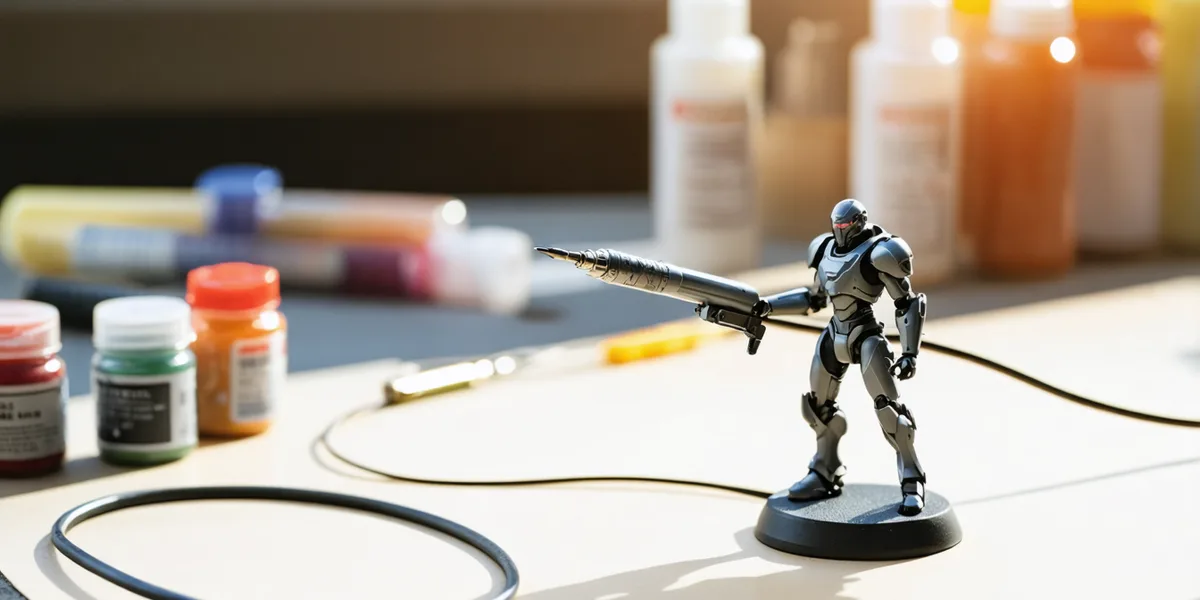
An airbrush for miniatures has one job most of the time: putting a thin, even coat of primer, basecoat or a zenithal highlight on a model in seconds instead of minutes. The fine-line freehand you see in competition work comes later, and it is not what decides your first purchase. Choose by the job, check three specs (nozzle size, feed and action), and pair it with a compressor that has a regulator. Here are the airbrushes on our shelf that answer each of those jobs, priced in your market.
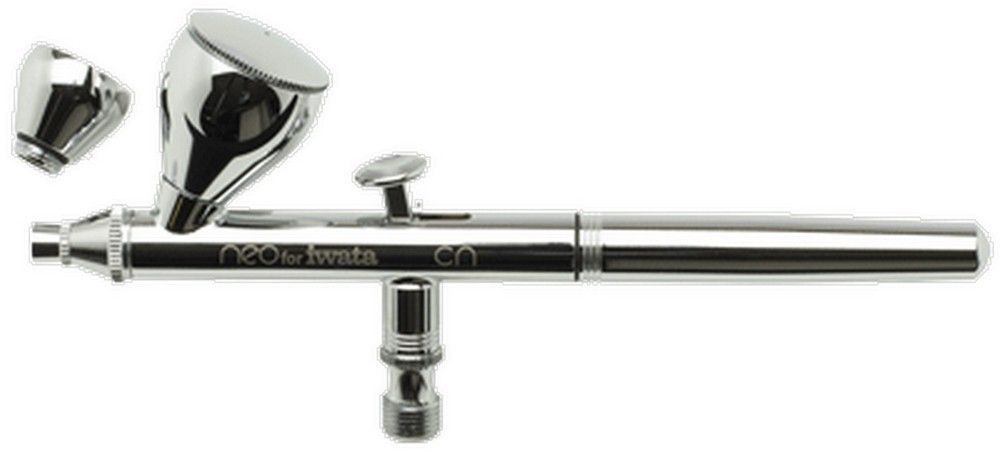

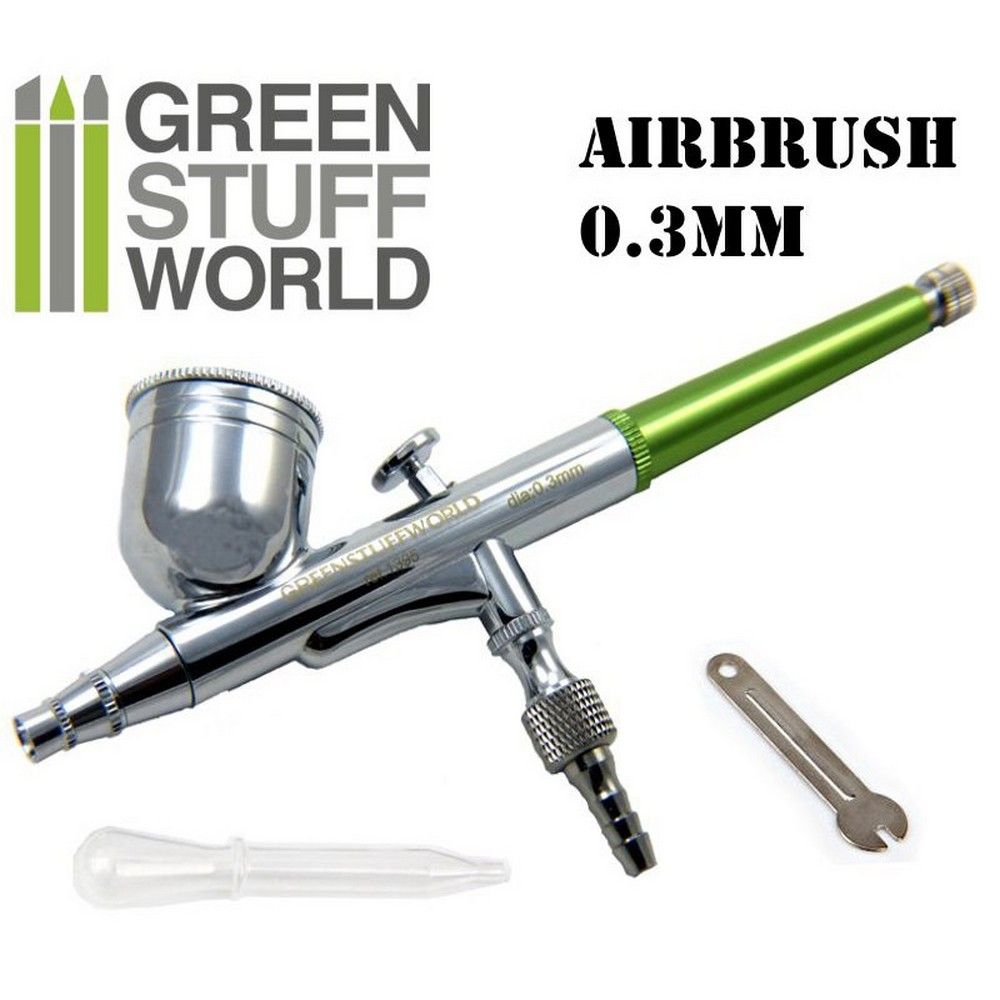
0.3mm · gravity · dual
Green Stuff World
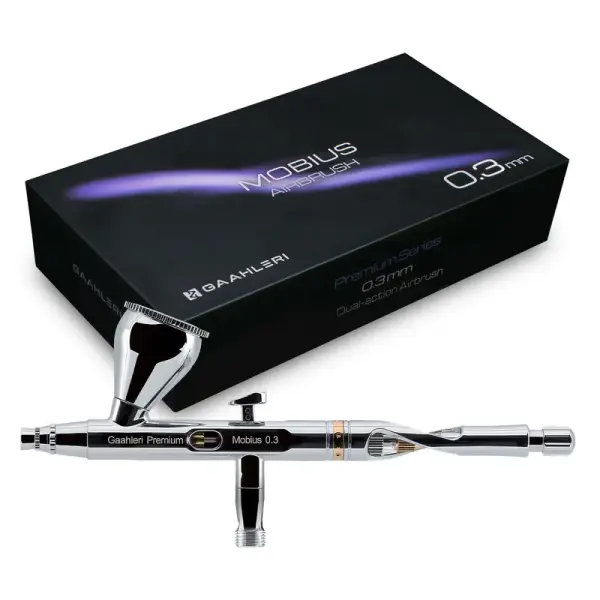
0.3mm · gravity · dual
Gaahleri
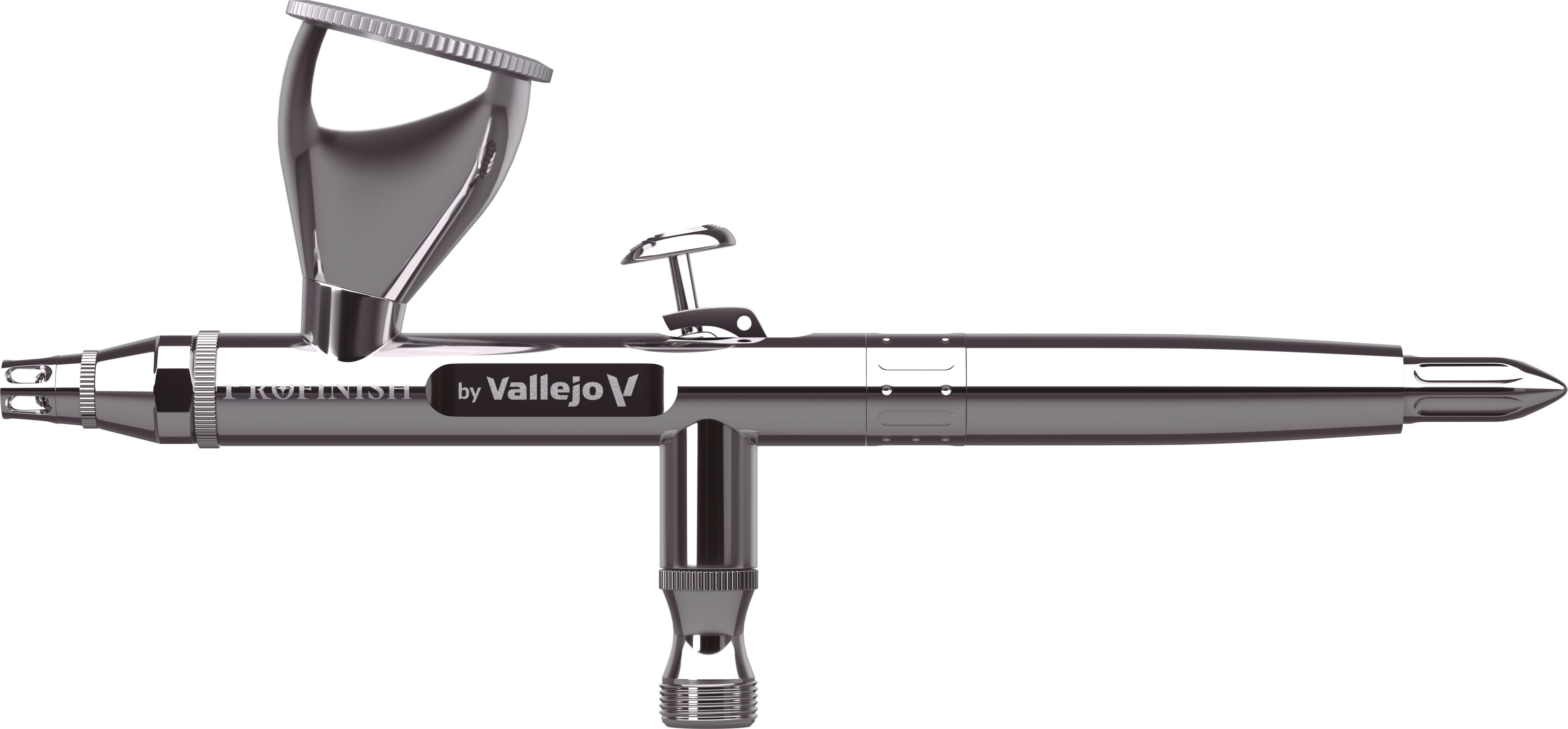
gravity · dual · 0.2mm and 0.3mm
Vallejo
Want the airbrush and compressor in one box? Jump to airbrush kits with a compressor.
Every spec on this page comes from the maker's or a retailer's own product record, as held in our catalogue. Where we do not hold a figure, we leave it out. Every airbrush we track, by brand, is on the airbrush shelf.
The three specs that matter
Nozzle size. This is the hole the paint leaves through, and it decides what the airbrush is good at.
- 0.2mm is a detail nozzle: fine lines, small glazes, eyes on a large model. It clogs more easily and wants paint thinned further.
- 0.3mm to 0.35mm is the all-rounder. Primer, basecoats, zenithal and most shading on 28mm models. If you buy one airbrush for miniatures, buy one in this range.
- 0.4mm to 0.5mm moves more paint for priming whole units, vehicles and terrain, and copes better with thicker primers.
Feed. A gravity-feed airbrush has the cup on top, so paint falls into the nozzle and sprays at low pressure. That is what nearly every miniature painter wants: you can work at the low pressures fine work needs, and you only load a few drops at a time. A siphon-feed (bottom-feed) airbrush pulls paint up from a jar underneath. It holds much more paint and suits big surfaces, which makes it a terrain and vehicle tool rather than a first airbrush for figures. Side-feed sits between the two and swaps cups from either side. Gravity feed vs siphon feed compares the three in full.
Action. On a dual-action airbrush, pressing the trigger down gives air and pulling it back gives paint, so you control both with one finger as you spray. On a single-action airbrush the trigger gives air only and the paint is set with a dial. Dual action takes an evening to learn, and nearly every model on this page uses it; it is also what lets you start a pass with air only, which is how you avoid a spatter at the start of each stroke. Single, dual and trigger action are compared in the gravity vs siphon guide.
The best airbrush for beginners
A first airbrush should be a 0.3mm to 0.35mm, gravity-feed, dual-action model from a maker that sells spare needles and nozzles. That last point matters more than any spec: you will bend a needle in your first month, and a cheap airbrush with no spare parts becomes scrap the day you do.
These are the ones we would point a beginner at, in that class:
- Neo for Iwata CN: gravity feed, dual action, 0.35mm nozzle. Iwata's Neo range, with spare parts sold separately.
- Green Stuff World Dual-Action Airbrush 0.3mm: gravity feed, dual action. Green Stuff World sell it direct in pounds, euros and dollars, and also make 0.2mm and 0.5mm versions if you later want a second brush for detail or priming.
- Vallejo Profinish: gravity feed, dual action, supplied with 0.2mm and 0.3mm needle and nozzle sets and three cups (3, 9 and 15 ml). Two airbrushes' worth of nozzle in one box. Its sibling the Vallejo Innovator also ships with both nozzle sets.
- Gaahleri Advanced Series GHAD-39: a dual-action gravity-feed airbrush supplied with two fluid cups and more than one needle size; the GHAD-68 is the larger model in the same series.
0.3mm · gravity · dual
Green Stuff World
gravity · dual · 0.2mm and 0.3mm
Vallejo
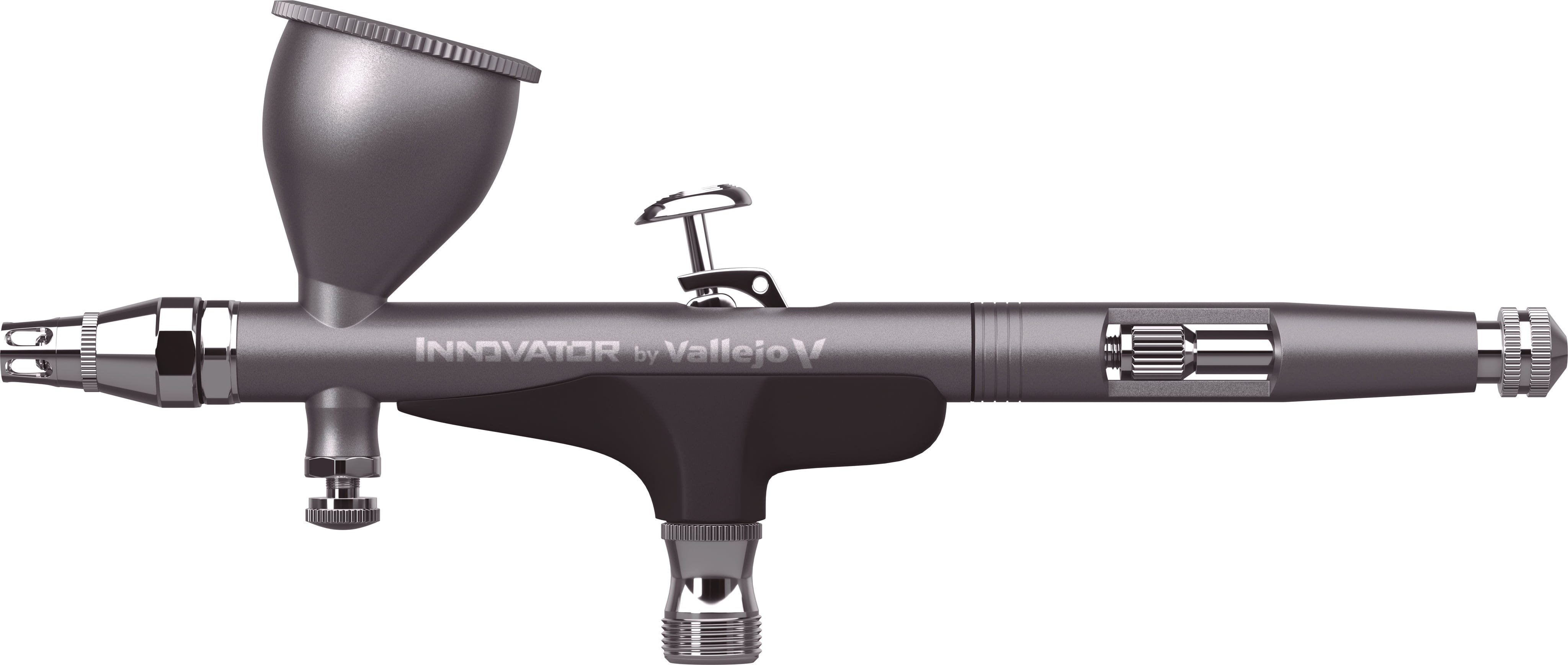
gravity · 0.2mm and 0.3mm
Vallejo

Airbrush kits with a compressor
A kit pairs an airbrush, a compressor and a hose in one box, and it is the simplest way to start: everything fits together, and there is one thing to order. The catch is that you choose the compressor by the airbrush attached to it, and the compressor is the half you live with (the noise in the room, the pulse in the spray, the water in the line on a humid evening). So judge a kit by its compressor first. Before you buy one, check four things on the listing:
- A regulator with a gauge, so you can set the 15 to 25 psi most miniature work uses.
- A moisture trap, or room to add one, so water does not spit out of the nozzle.
- A tank or auto start/stop. A tank smooths the pulse; auto stop means the motor rests when you are not spraying.
- An airbrush whose maker sells spare needles and nozzles. The airbrush in a cheap kit is often the part that gets replaced first.
These are the kits with a compressor that the shops we track sell in your market:
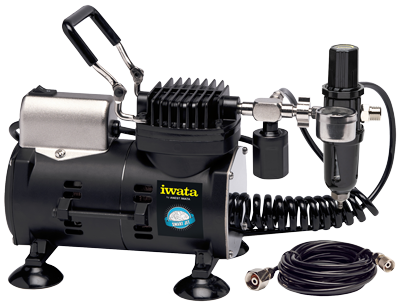
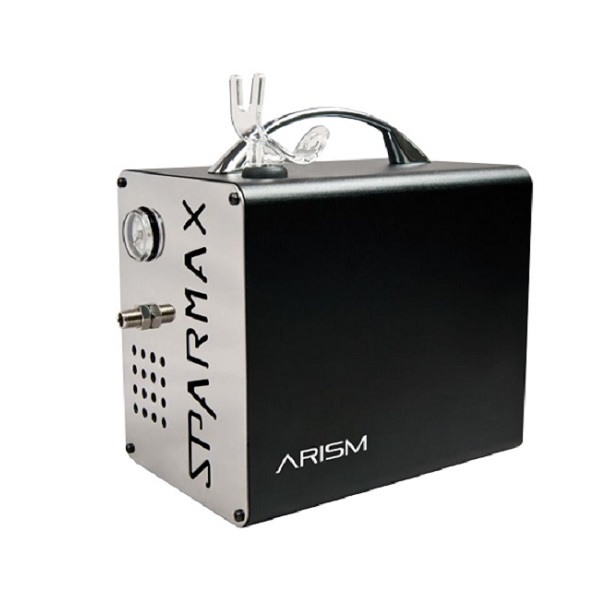
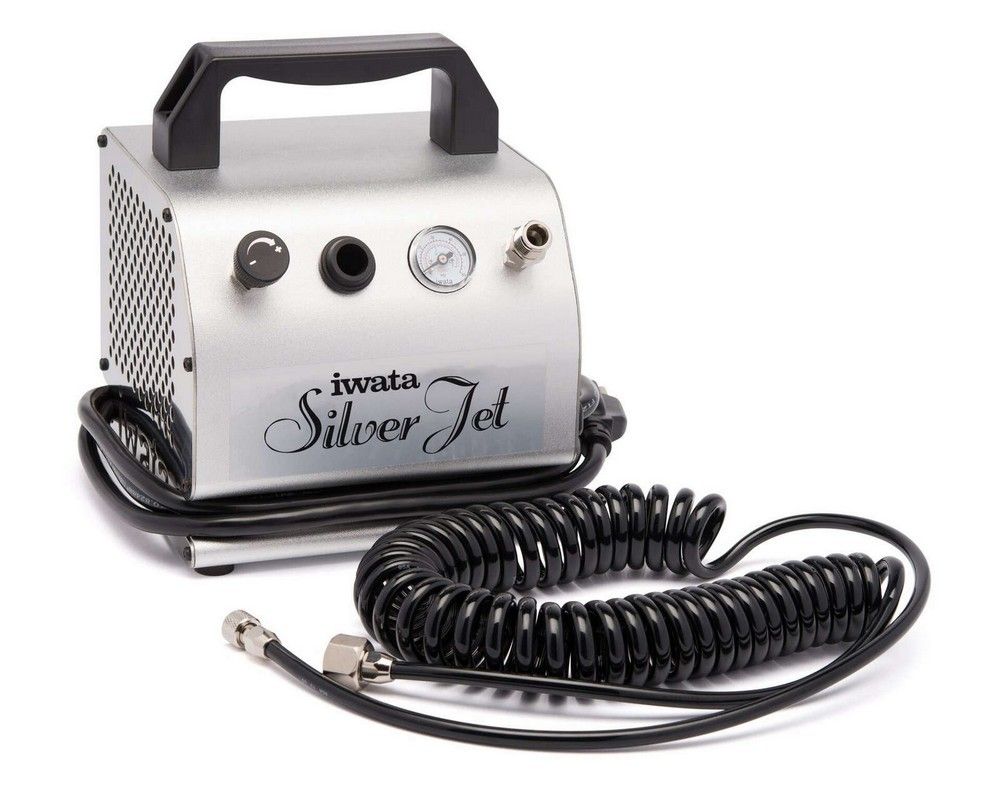
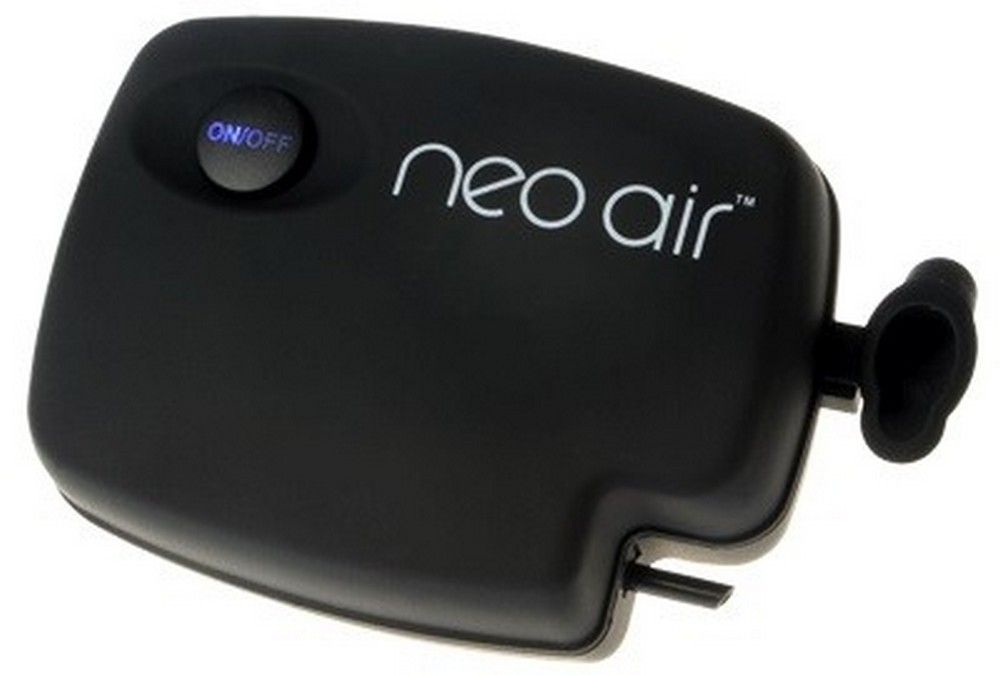
In this edition: Iwata's Neo Air with the Neo Gravity airbrush, two Iwata Silver Jet bundles (with the Neo CN or the Eclipse CS, airbrushes this guide recommends on their own), Gaahleri's Serenair kit, and Sparmax's Arism Mini kit with the 0.4mm MAX-4 airbrush.
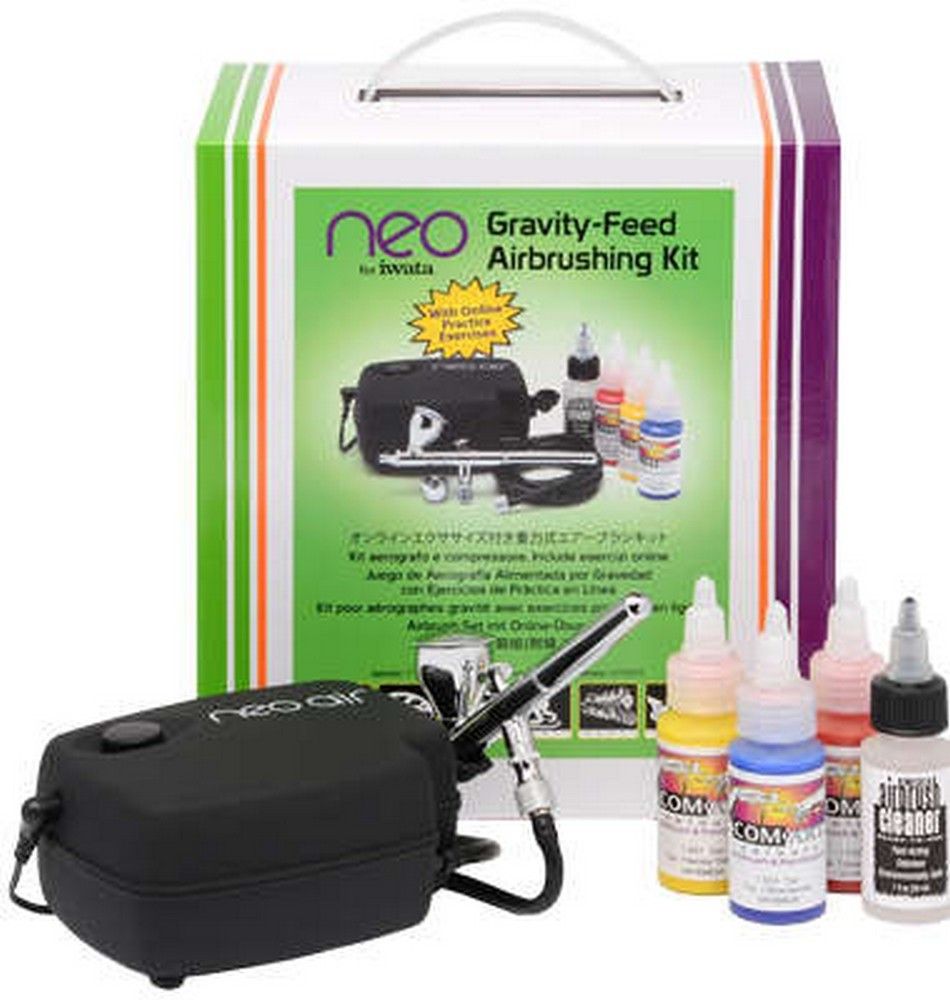
compressor and airbrush bundle
Iwata

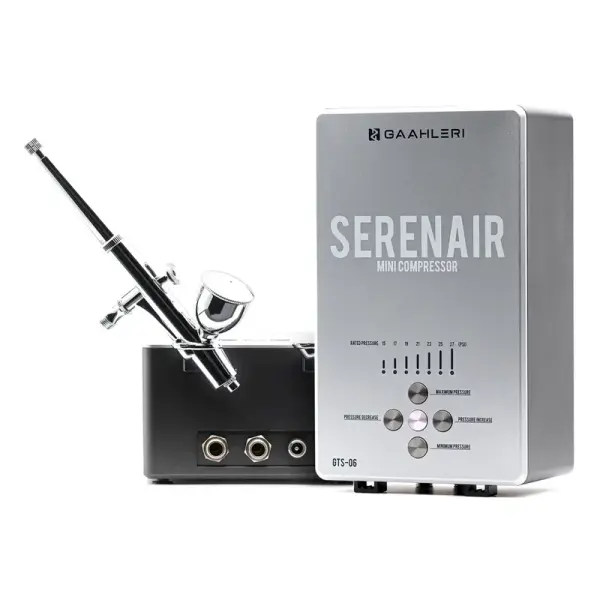
airbrush and compressor kit
Gaahleri
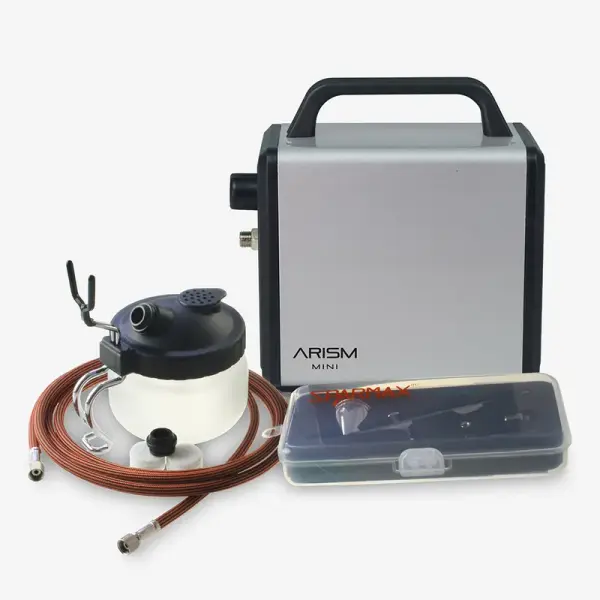
Arism Mini Star compressor, MAX-4 0.4mm airbrush and cleaning pot in one kit · Oil-less piston, 45 PSI preset max, 12-14 LPM, 2.5kg
Sparmax
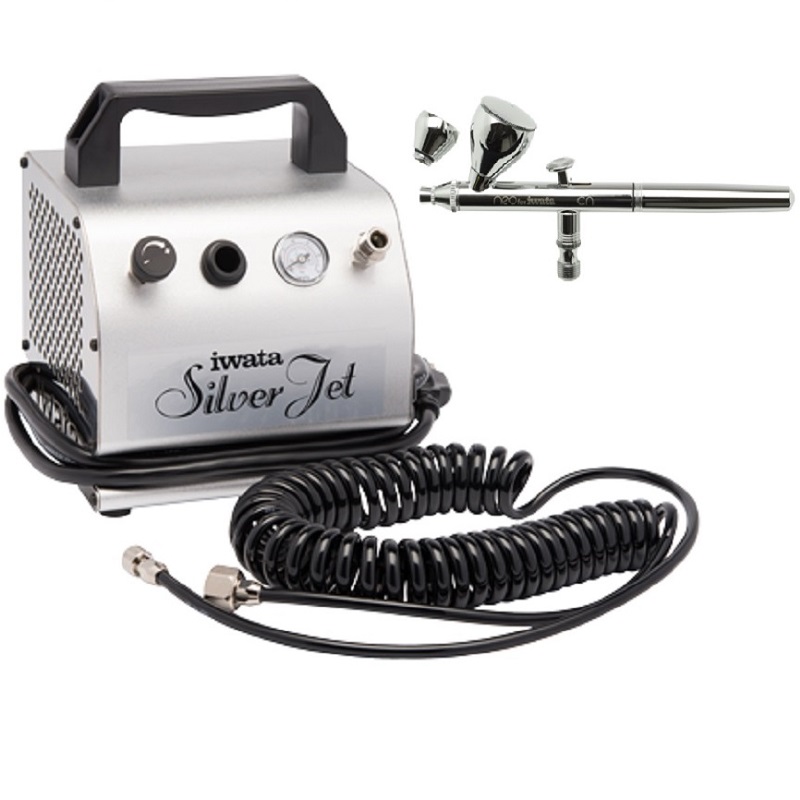
Or build your own kit
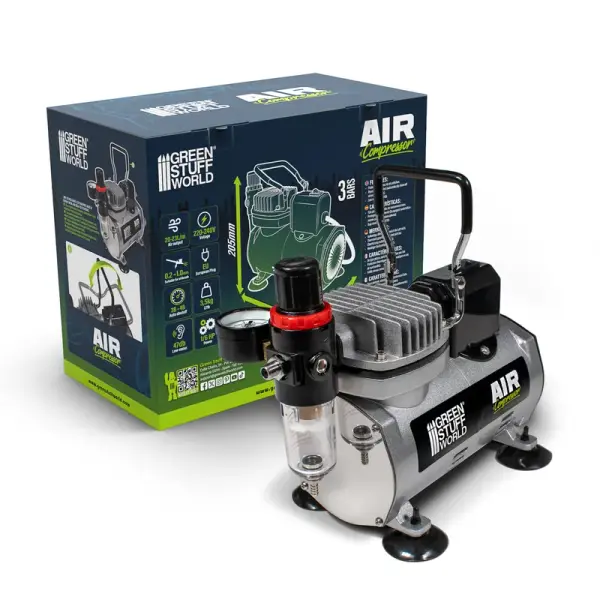
Buying the compressor and the airbrush separately takes one more decision, but you get the compressor you want and an airbrush from the list above, and you can upgrade either half later. It is also the only route in markets where the shops we track sell few kits. Any of the airbrushes in the beginner list above with one of these compressors makes a complete setup; check the hose fitting matches, or add an adaptor. The compressor guide explains tank vs tankless, noise and moisture traps, and every compressor we track is priced side by side.
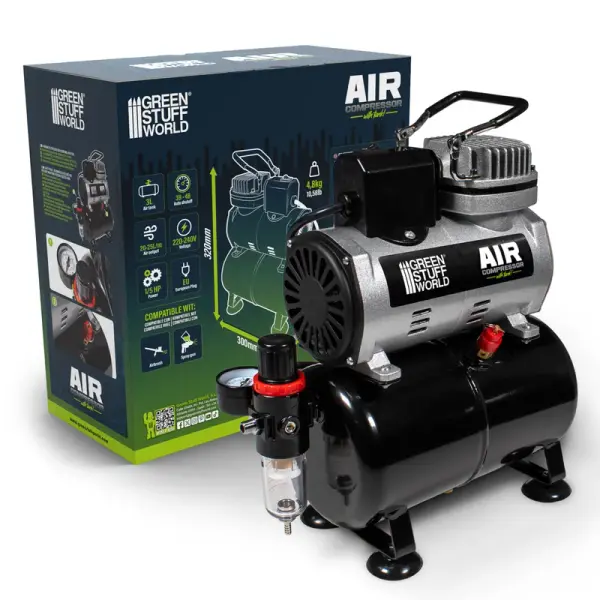
tank compressor
Green Stuff World
The one to grow into
If you already know you will airbrush a lot, the step up is a better-made 0.3mm to 0.35mm brush rather than a smaller nozzle. The trigger feels smoother, the needle seats more precisely, and the spray stays even at the low pressures used for glazing and zenithal work.
- Iwata Eclipse HP-CS: gravity feed, dual action, 0.35mm nozzle. More of the shops we track list it than any other airbrush on this page, so it is the easiest to find in stock and the easiest to find parts for.
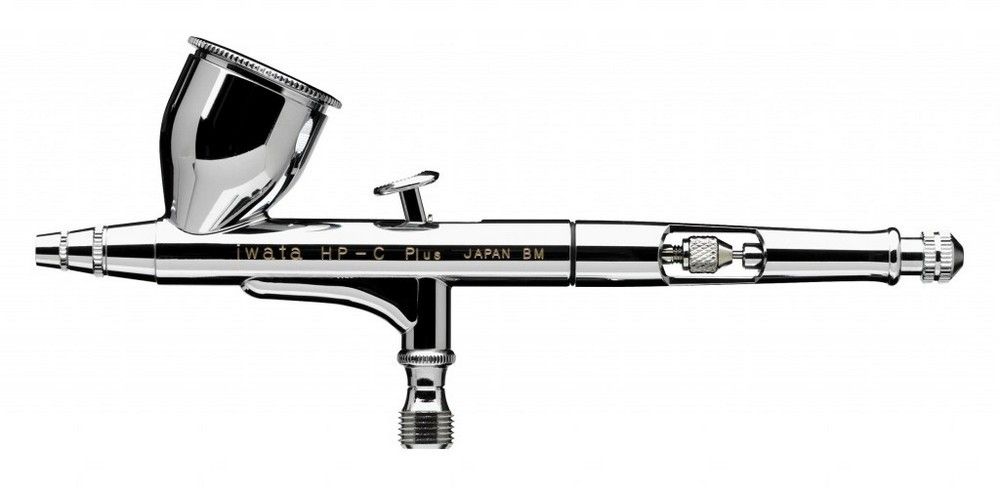
- Iwata HP-C Plus: gravity feed, 0.3mm nozzle, the High Performance Plus series, a finer instrument in the same size class.
- Gaahleri Premium Series GHPM-Mobius: gravity feed, dual action, made in a 0.3mm and a 0.2mm version.
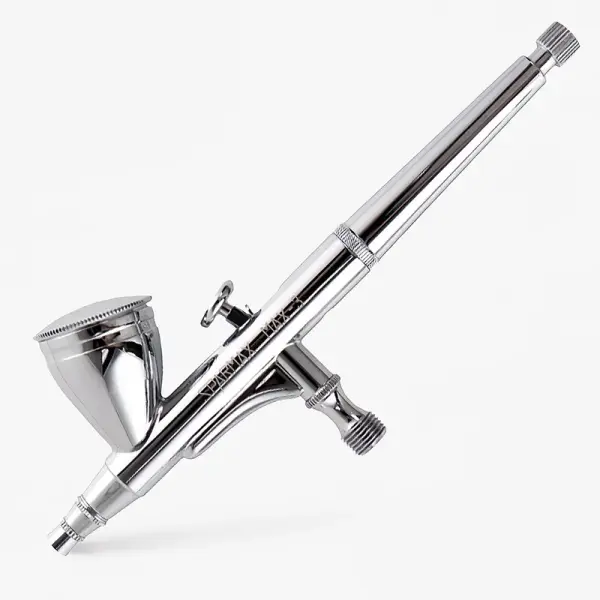
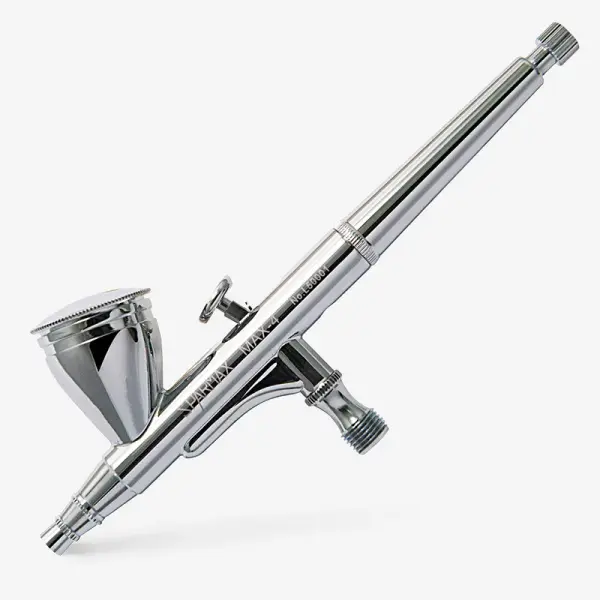
- Sparmax MAX-3: gravity feed, dual action, 0.3mm, with a 0.4mm MAX-4 alongside for heavier work.
- Harder & Steenbeck Infinity 2024 CR Plus 2in1: gravity feed, dual action, shipped with two nozzle sets. The German maker's range is deep in the UK; see the Harder & Steenbeck shelf.
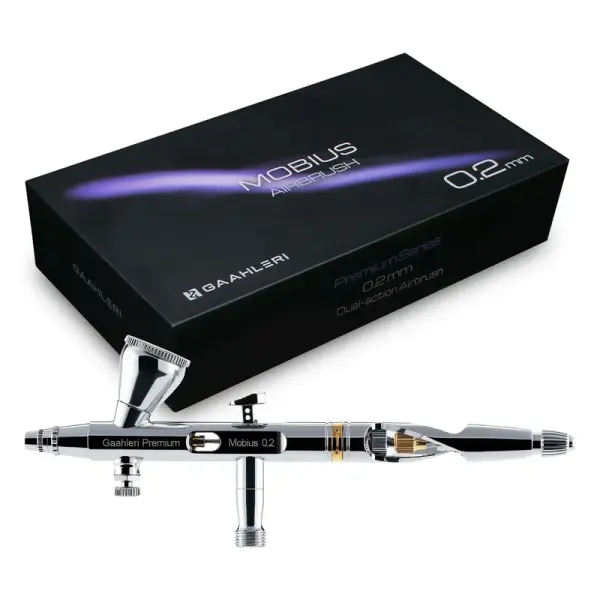
0.2mm · gravity · dual
Gaahleri
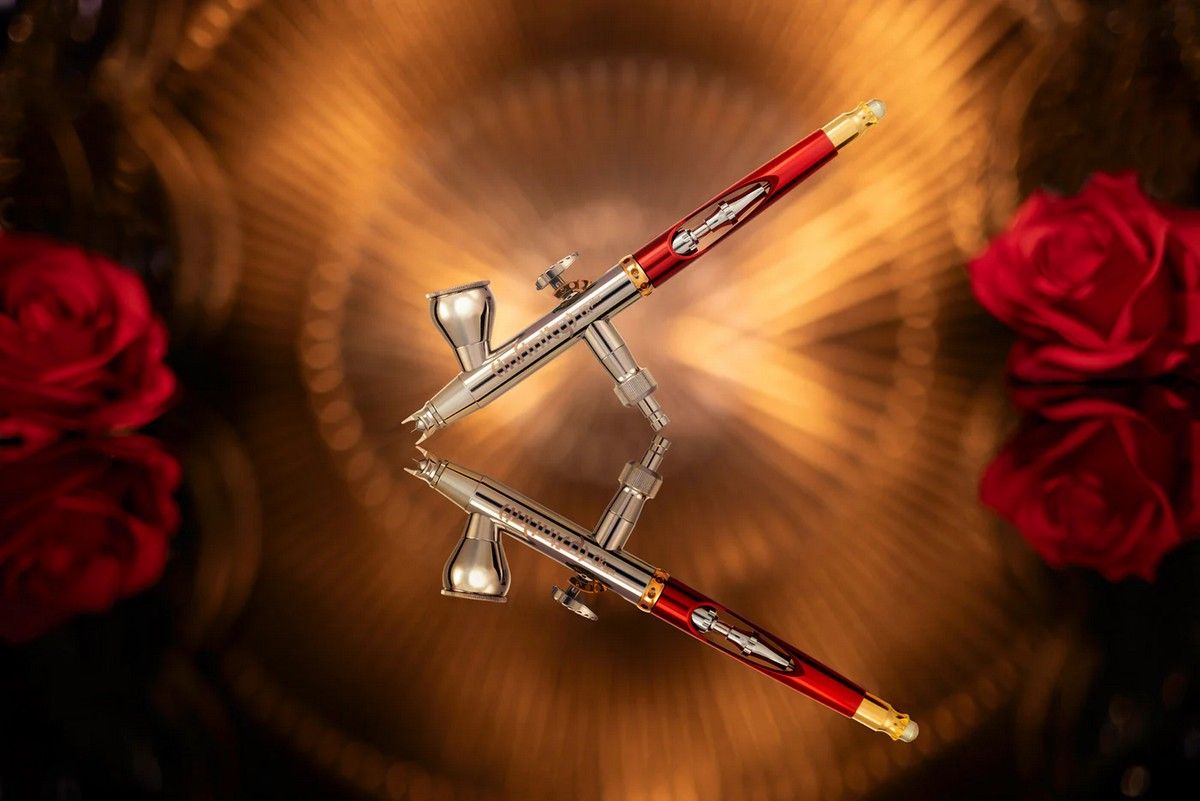
gravity · dual · two nozzle sets
Harder & Steenbeck
gravity · dual
Harder & Steenbeck
An airbrush for priming and zenithal
Priming a unit, or laying a zenithal highlight over it, is where an airbrush pays for itself first. A 0.3mm to 0.35mm all-rounder does it well. A 0.5mm nozzle does it faster, copes better with thicker primers, and lets you keep your fine brush clean for colour.
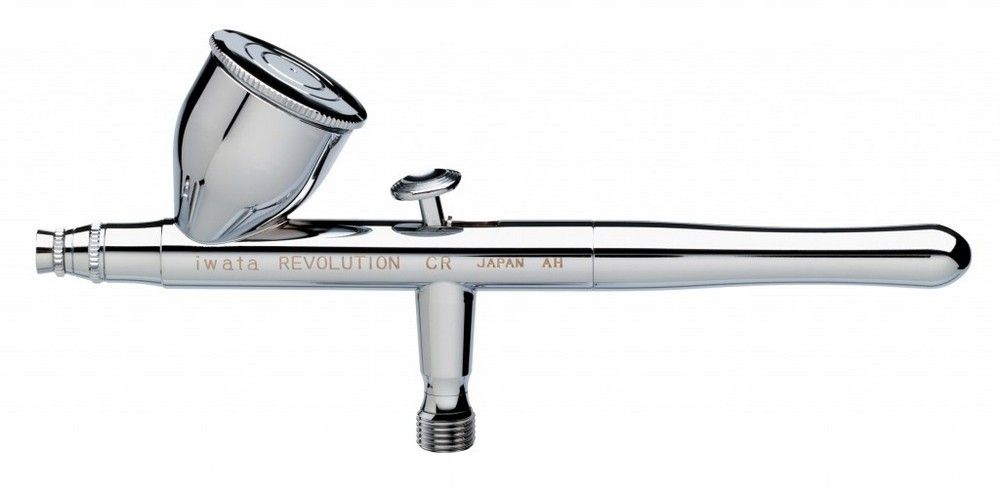
- Iwata Revolution CR: gravity feed, dual action, 0.5mm.
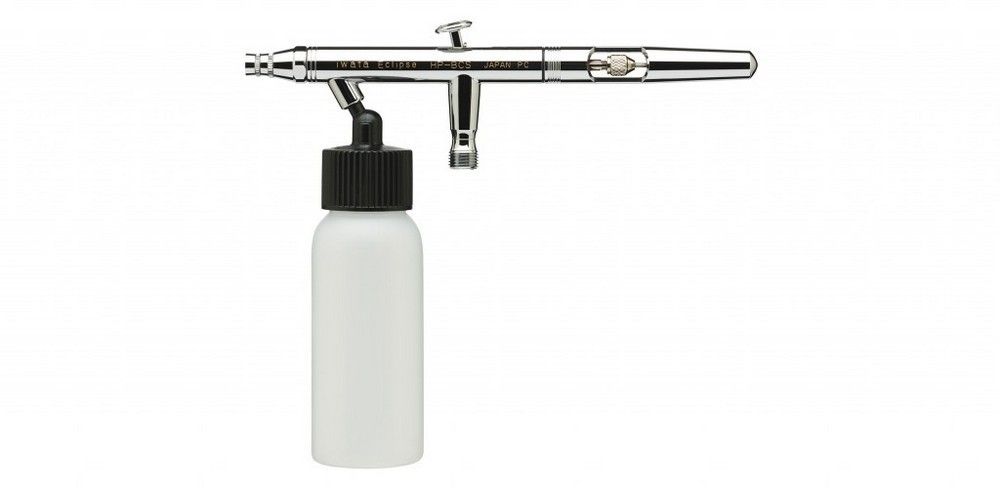
- Iwata Eclipse BCS: siphon feed, dual action, 0.5mm, for big jars of primer on vehicles and terrain.
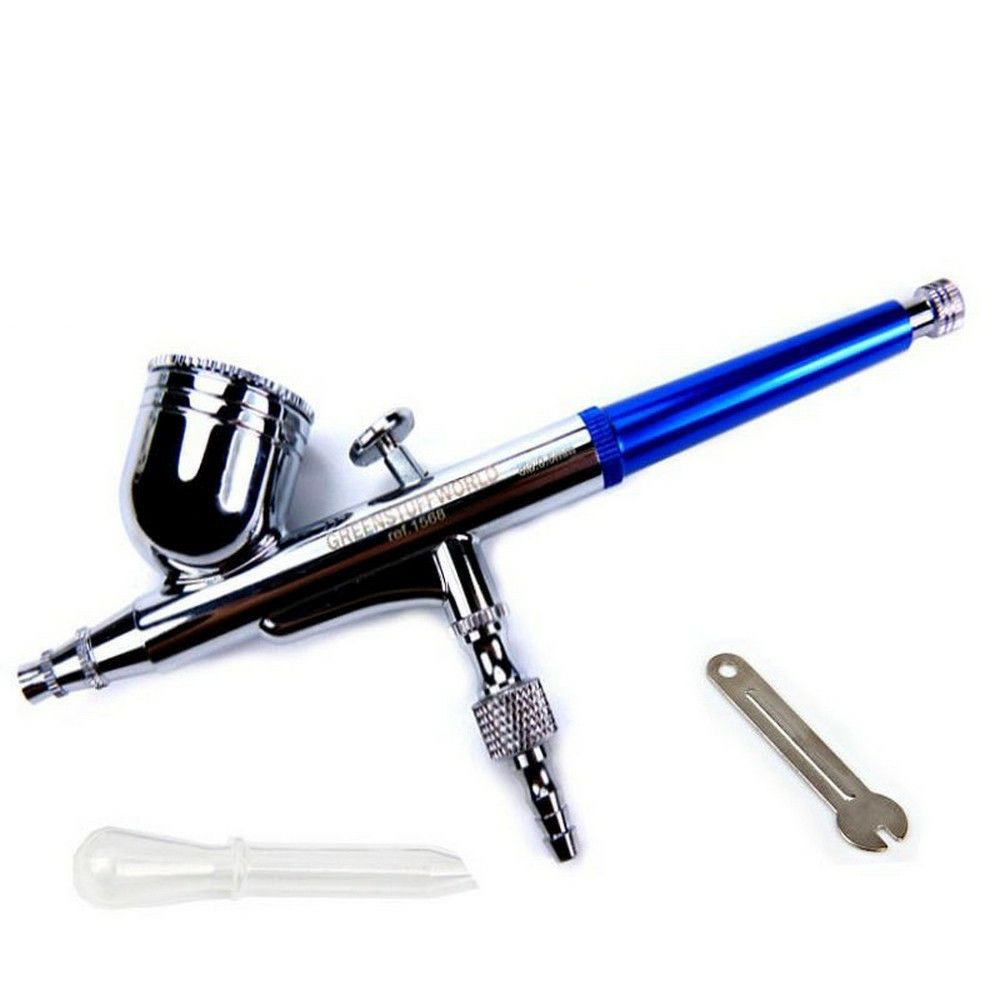
- Green Stuff World Dual-Action Airbrush 0.5mm: the budget answer, gravity feed.
A second airbrush kept only for primer is one of the best upgrades in the hobby: primer is the paint most likely to dry in a nozzle, and a dedicated priming brush means your detail brush never sees it. Priming indoors is also when an airbrush spray booth earns its place.
0.5mm · gravity · dual
Green Stuff World
An airbrush for fine detail
A 0.2mm nozzle is for the second airbrush, not the first. It sprays narrower lines and finer glazes, but it needs paint thinned more, it clogs sooner, and it punishes poor cleaning. Once you are comfortable with a 0.3mm brush, these are the detail models we track:
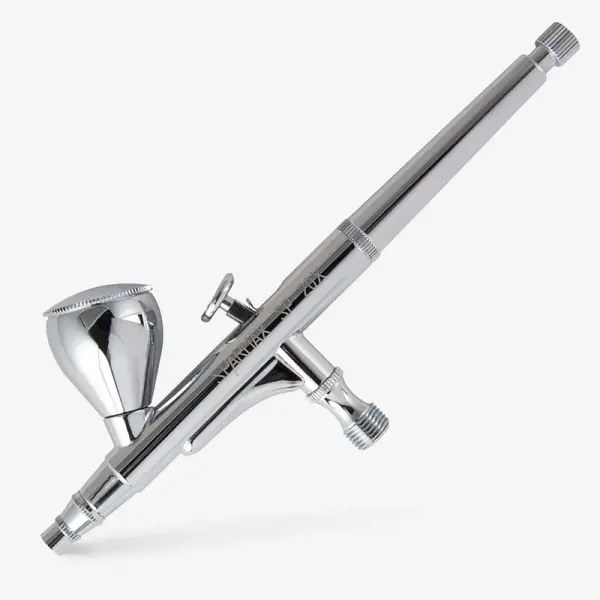
- Sparmax SP-20X: gravity feed, dual action, 0.2mm, the fine-detail end of the Sparmax range.
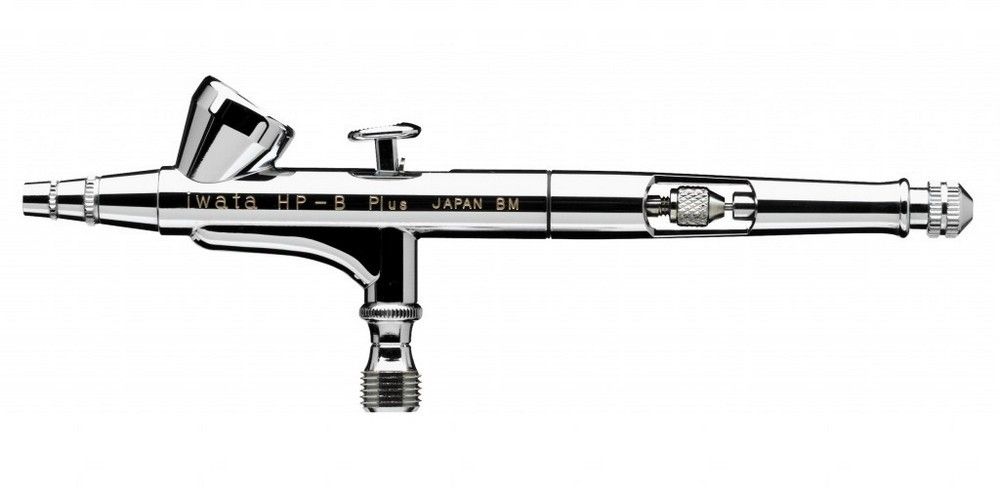
- Iwata HP-B Plus: gravity feed, 0.2mm.
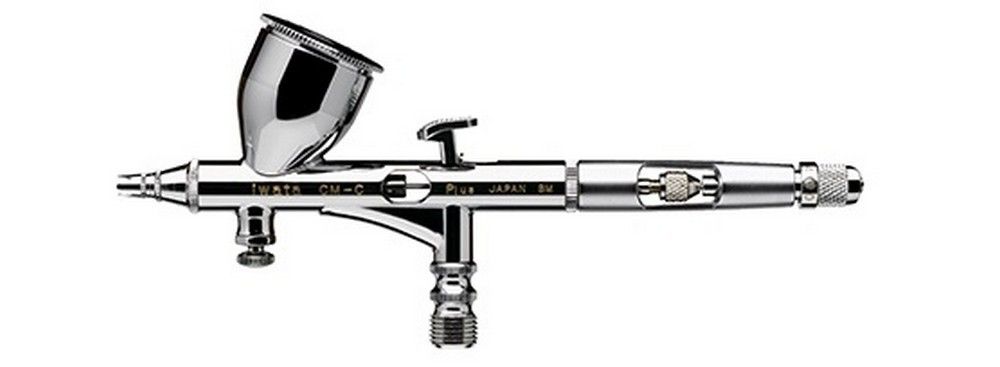
- Iwata Custom Micron CM-C Plus: gravity feed, 0.23mm nozzle, from Iwata's Custom Micron range.
- Green Stuff World Dual-Action Airbrush 0.2mm: the inexpensive way to find out whether you want a detail brush at all.
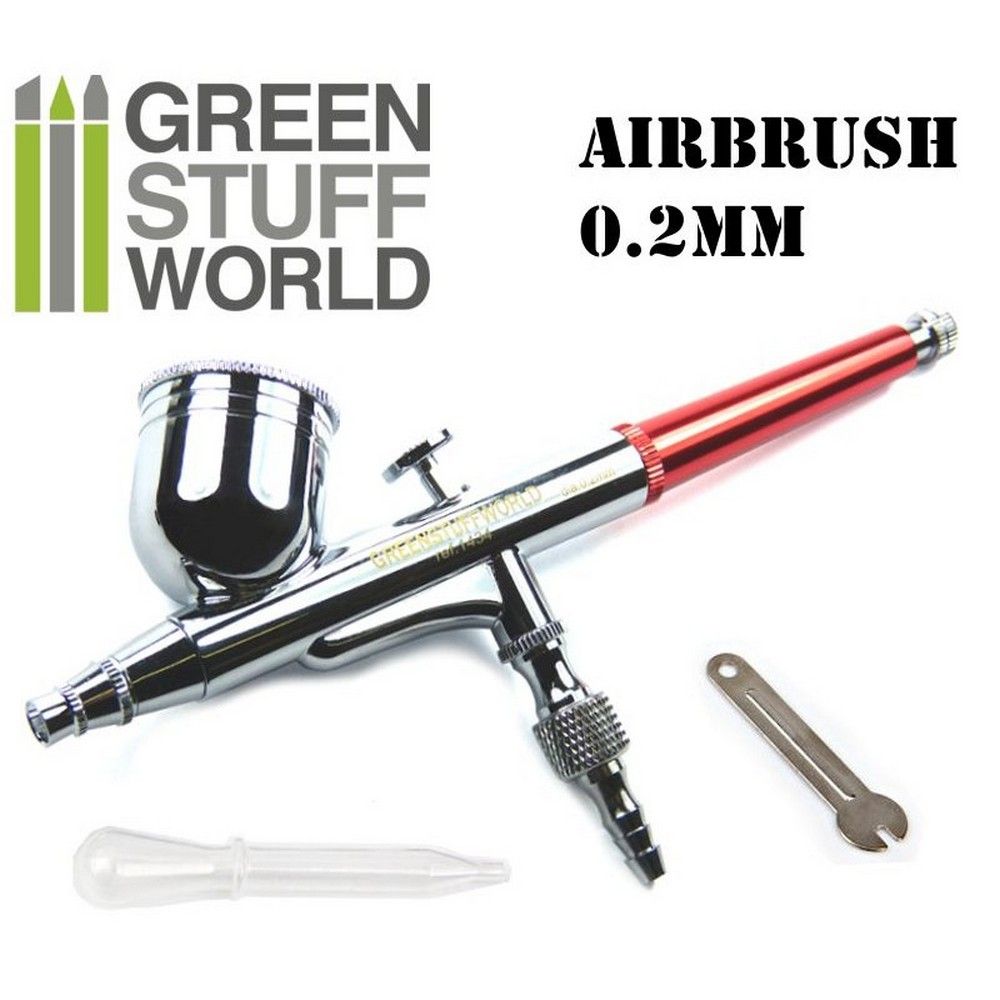
0.2mm · gravity · dual
Green Stuff World
The best airbrush paint for miniatures
Any acrylic can go through an airbrush once it is thin enough, but airbrush paint ranges arrive already thinned to spray, which removes the step most beginners get wrong. The three big ranges each have one: Vallejo Model Air (and Game Air, the airbrush version of Vallejo's Game Color), Army Painter Warpaints Air, and Citadel's Air range, which covers the Citadel palette for anyone matching an existing army. Each brand's pots are priced on its own page: Vallejo, Army Painter and Citadel.
For ordinary brush paints, thin them to the consistency of milk with an airbrush thinner or flow improver rather than water alone; water on its own makes the paint bead and dry at the nozzle. Airbrush thinner covers which thinner suits which paint, and how to thin paints covers the ratios.
What else you need
- A compressor with a regulator and a moisture trap. A regulator lets you set the 15 to 25 psi most miniature work uses; a trap stops water spitting out of the nozzle on a humid day. The compressor guide explains tank vs tankless and noise, and every compressor we track is priced side by side.
- A cleaning pot and cleaner. Most "my airbrush is broken" problems are dried paint. How to clean an airbrush is the three-minute routine, with the best airbrush cleaner for your paint; the pots, brushes and cleaners are on the cleaning shelf.
- Spare needles and nozzles for whichever model you buy, from the same maker. Check they exist before you buy the airbrush.
Tips
- One airbrush, 0.3mm to 0.35mm, gravity, dual action. That covers primer to highlights on 28mm models.
- Air on first, air off last. Start every pass with air only and stop the paint before the air, and spatter disappears.
- Spray at the lowest pressure that atomises the paint. Thin paint and low pressure beat thick paint and high pressure.
- Clean between colours and at the end of the session, every time. It is the difference between an airbrush that lasts years and one that spits in a month.
- Buy the spare needle the same day. It is cheap, and you will need it.
Questions
Do I need a compressor for an airbrush?
Yes, or another steady air supply. An airbrush has no air of its own. A compressor with a regulator lets you set the 15 to 25 psi most miniature work uses, and a moisture trap stops water reaching the paint. Kits with a compressor, or a compressor bought on its own, both do the job.
Can I use a tyre or workshop compressor for an airbrush?
A tyre inflator is a poor fit, because it is built for high pressure in short bursts and has no regulator or moisture trap. A workshop compressor can work if you fit a regulator, a moisture trap and the right hose fitting, but it is usually far louder than an airbrush compressor in a room where you paint.
Compare airbrushes
Every airbrush we track, by brand and nozzle size, with prices from the shops that list it in your market.
We earn a small commission from qualifying purchases at no extra cost to you.