
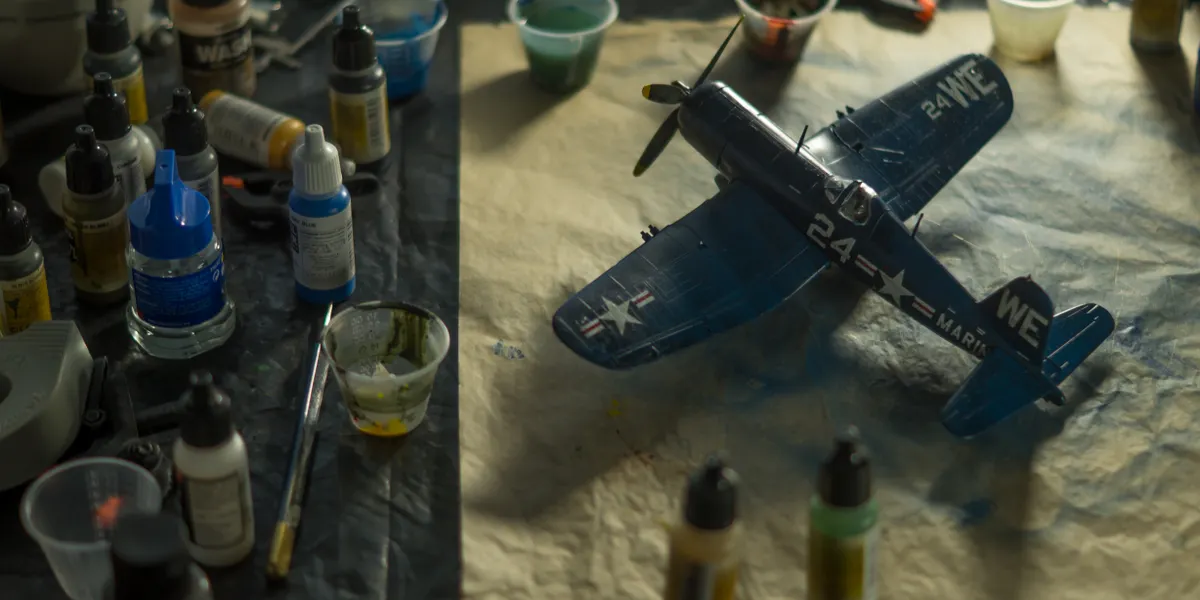
Acrylic, enamel and lacquer are the three kinds of model paint, and the difference is the solvent each is thinned with. Acrylic thins and cleans up with water or the maker's acrylic thinner, smells least and suits most painting, by brush or airbrush. Enamel uses a white-spirit type thinner, stays workable for longer, and is the paint of choice for washes and weathering you wipe back. Lacquer uses a strong lacquer thinner, dries fastest and hardest, and makes the toughest airbrushed base coats and metal finishes. Many modellers end up using all three, and lay them down in a fixed order: lacquer first, acrylic over it, enamel washes last.
One of each type, from the shops we compare in your market:
AK Interactive
AK Interactive
Acrylic vs enamel vs lacquer at a glance
| Acrylic | Enamel | Lacquer | |
|---|---|---|---|
| Thinned and cleaned with | Water or the maker's acrylic thinner (Tamiya: its own thinner) | Enamel thinner (white spirit type) | Lacquer thinner |
| Smell and ventilation | Mild; fine at a desk (mask when airbrushing) | Noticeable; ventilate | Strong; spray booth or open window, and a respirator |
| Drying | Fast to touch | Slow; stays workable longest | Fastest, and cures hardest |
| Brush or airbrush | Both | Brush, washes and effects; airbrush when thinned | Airbrush mainly; brush only small areas |
| Safe to put it over | Lacquer, cured enamel, primer | Lacquer, cured acrylic | Primer, bare plastic, other lacquer |
| Typical job | General painting, figures, details | Panel lines, washes, streaks, grime | Base coats, metallics, gloss finishes |
| Brands | Vallejo, AK 3rd Gen, AMMO ATOM, Tamiya X/XF | AK and AMMO washes, Revell Email | Mr Color, Tamiya LP, AK Real Colors |
The comparison is about solvents, not quality. A good acrylic airbrushes as smoothly as a lacquer in practised hands; lacquer is simply more forgiving of a heavy coat and harder once it cures.
The layering rule: lacquer first, enamel last
Lacquer thinner is the strongest of the three and can soften the other two, so lacquer goes at the bottom. Enamel goes last because a light touch of enamel thinner, used to wipe a wash back, leaves cured lacquer and acrylic in place. So the order is:
- Lacquer at the bottom: primer, base coats, metal finishes.
- Acrylic for colours and details over it.
- Enamel washes and weathering, wiped back with a bud that is only lightly damp with thinner, so the acrylic underneath is not scrubbed.
- A varnish to seal it.
Tamiya write their enamel Panel Line Accent Color for use over "Tamiya Color lacquer or acrylic paints" (Tamiya's page), which is the rule in one sentence. The thing to avoid is lacquer over acrylic or enamel: its thinner can lift or wrinkle the coat below. Alclad, a lacquer, says its finishes need a primer on injection-moulded kits and that "Other hobby enamel paints are suitable" as a gloss base under its high-shine metals, with a test on scrap plastic first (Alclad II directions).
Acrylic model paint: the default
For most painting, acrylic is the answer: no harsh thinner, little smell, quick to dry and quick to clean out of a brush or an airbrush. The ranges differ in pot size, finish and how ready to spray they are:
- Vallejo Model Color and Model Air (the airbrush-ready version), plus Mecha Color for mecha kits and Metal Color for acrylic metallics. Vallejo Game Color vs Model Color explains the two brush ranges.
- AK Interactive 3rd Generation, AK's acrylic range, in brush and airbrush versions.
- AMMO by Mig ATOM and AMMO Acrylics. See the AMMO chart.
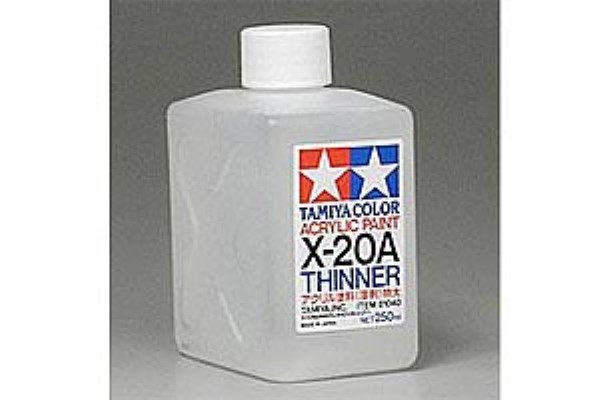
- Tamiya X (gloss) and XF (flat) acrylics, thinned with Tamiya's X-20A. They are alcohol-based rather than water-based, so many airbrushers thin them with lacquer thinner instead; that also makes them more sensitive to enamel thinner, so wipe washes over them gently. See the Tamiya chart.
- Mr Hobby Aqueous Hobby Color (also alcohol-based, with its own thinner), and Humbrol and Revell Aqua Color acrylics, mostly in Europe at the shops we compare.
AK Interactive
AK Interactive
AK Interactive
For acrylic through an airbrush, our best airbrush paint guide compares the pre-thinned ranges.
Enamel model paint: washes, weathering and the brush
Enamel paint dries slowly, and that is its strength. A wash or a streak stays movable long enough to blend it, and a thin enamel wash runs along an engraved line on its own, then wipes back off the flat surface with a little thinner. That is why most panel line washes and weathering effects for scale models are enamel. Miniature painters get a similar wipe-back effect with oil washes.
- AK Interactive enamel paneliners and enamel liquid pigments.
- AMMO by Mig enamel effects (grime, fuel stains, mud, dust) and panel line washes. AK vs AMMO by Mig compares the two makers' paint ranges.
- Tamiya Panel Line Accent Color, an enamel wash with a brush in the cap.
- Revell Email Color, Revell's enamel range ("Email" is German for enamel), in the UK and Europe at the shops we compare.
AK Interactive
AK Interactive
AK Interactive
Tamiya
Humbrol is the best-known enamel brand in Britain, but the shops we compare list only its acrylics so far, mostly in Europe. Enamel tins for general brush painting are a gap we are still filling.
Here, AK Interactive's enamel paneliners, washes and liquid pigments are the enamel products the shops we compare stock so far.
Lacquer model paint: hardest finish, strongest smell
Lacquer goes on thin, flows flat, dries fast and cures harder than either of the others, so it is the finish for gloss car bodies, smooth aircraft skins and the base coats every other paint goes over. The price is the solvent: lacquer thinner is strong-smelling and harmful to breathe, so spray it in a booth (see the spray booth guide) or at least by an open window with a respirator.
- Mr Color from Mr Hobby, the Gunpla builders' lacquer, including its Gundam Color shades, with the deepest range in Europe at the shops we compare. See the Mr Hobby chart.
- Tamiya LP, Tamiya's lacquer line, sold under the same colour names as its acrylics.
- AK Real Colors, AK's acrylic lacquer range of historical colours, sold in all five of our markets. See the AK Real Colors chart.
- AMMO A-STAND, AMMO's metallic, candy and hot-metal lacquers.
AK Real Colors
AK Real Colors
Metal finishes: Alclad II and the alternatives
Polished metal is where lacquer earns its place. Alclad II is the best-known lacquer metal finish; its directions call regular Alclad "similar in strength to lacquer/cellulose car paints", say high-shine finishes "require a glossy base coat" such as its Gloss Black Base, and give a spraying pressure of "12-15psi" (Alclad II directions).
Alclad II is not stocked by the shops we compare in your market yet. AK Xtreme Metal, AMMO's A-STAND metallics and Mr Hobby's Mr Metal Color fill the same airbrushed-metal job, and Vallejo Metal Color is the acrylic alternative.
AK Interactive
AK Interactive
AK Interactive
AK Interactive
Lacquer vs acrylic paint for an airbrush
Both spray well. Lacquer is easier to get smooth: it levels as it dries and tolerates a heavier coat, while acrylic is more prone to drying on the needle tip. Acrylic is easier to live with: no fumes beyond the ordinary, water cleanup, and nothing to strip from a painted base coat by accident. If you paint at a desk in a shared room, choose acrylic. If you have a booth and want glass-smooth gloss or bright metal, lacquer is worth the ventilation. Our airbrush guide covers the airbrush itself, and airbrush cleaning covers getting each paint out of it.
Enamel vs acrylic model paint
For brushing a whole model, enamel's long open time gives smooth, brush-mark-free coats, but it can take a day or more to dry hard, and it needs white spirit to clean. Acrylic dries in minutes, cleans with water and is far more widely stocked. That is why acrylic has taken over general painting and enamel is now mostly used for what it is best at: washes, panel lines and weathering you wipe back.
Best paint for plastic models: a quick decision
- First kit, brush only: acrylic. Vallejo or AK 3rd Gen, a primer and a matt varnish; see paint sets for scale models.
- Panel lines and weathering: an enamel wash and its thinner.
- Airbrush, at a desk: pre-thinned acrylic (Model Air, AK 3rd Gen Air).
- Airbrush, with a booth: lacquer for primer, base coats and metal finishes.
- Gunpla: markers, acrylic or lacquer; see our best paint for Gunpla guide.
Thinners: one for each type
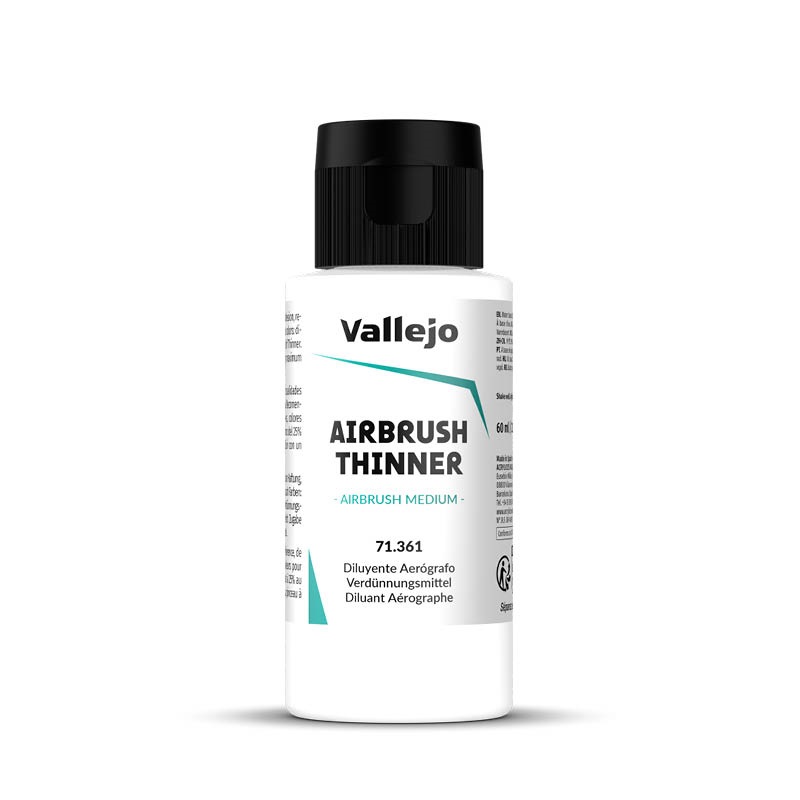
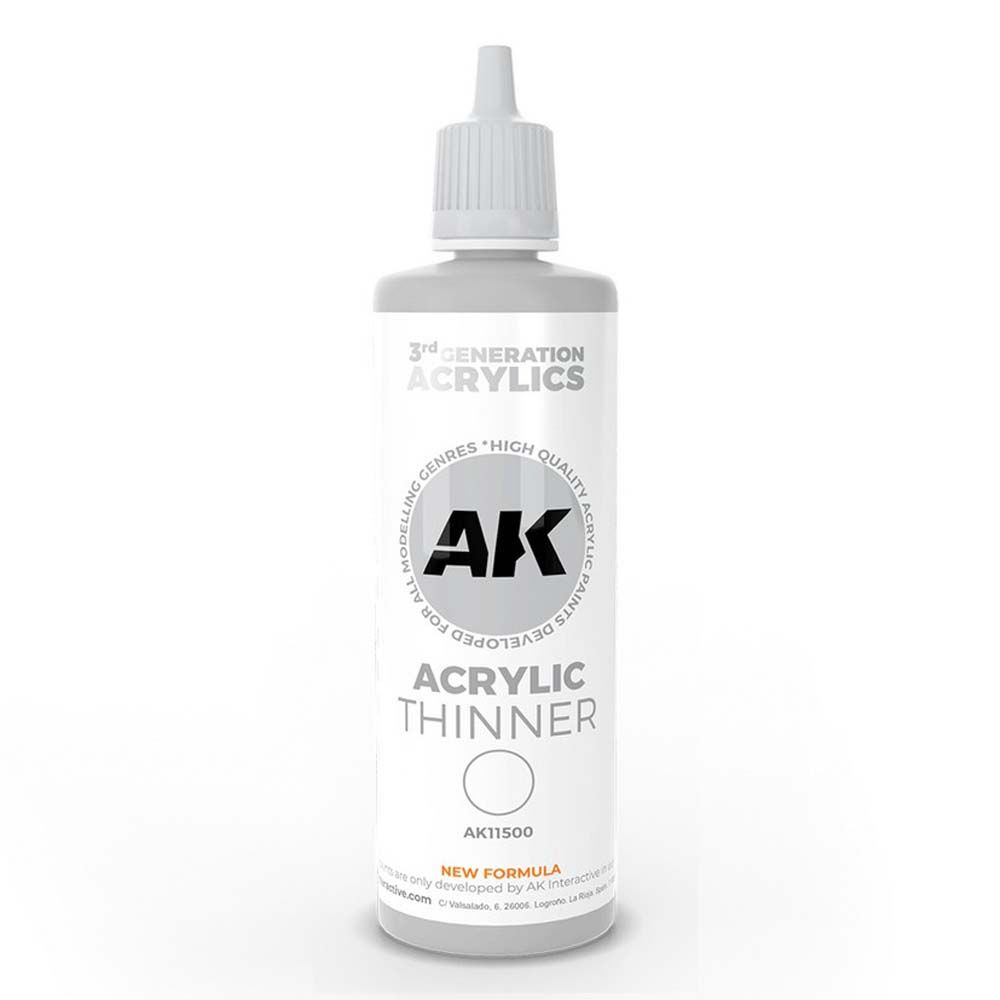
Match the thinner to the paint. Acrylic thinner will not thin lacquer or enamel, and lacquer thinner will lift most dried acrylic. (Tamiya's alcohol-based acrylics are the known exception in the cup: many airbrushers thin them with lacquer thinner.) Each maker sells its own; our airbrush thinner guide goes through which goes with which.

Questions
What is the difference between acrylic, enamel and lacquer paint?
The solvent. Acrylic thins with water or an acrylic thinner, enamel with a white-spirit type thinner, and lacquer with a strong lacquer thinner. The solvent decides the smell, the drying time and which paint can go over which.
Can you put enamel over acrylic?
Yes, once the acrylic is dry. Enamel washes over acrylic are the usual way to panel line and weather; wipe back with a bud only lightly damp with thinner.
Can you put acrylic over enamel?
Yes, once the enamel has fully dried, which takes longer than acrylic. Lacquer over enamel is the combination to avoid.
Lacquer vs acrylic: which is better for beginners?
Acrylic. It needs no special ventilation and cleans up with water. Lacquer gives a harder finish but needs a spray booth or strong ventilation and a respirator.
What is the best paint for plastic models?
Acrylic for most painting, because it is easy to clean and widely stocked. Add an enamel wash for panel lines and weathering, and lacquer if you airbrush with good ventilation and want the hardest gloss or metal finish.
We compare makers' published details and the prices at the shops we track; we have not sprayed or brushed these paints ourselves.