
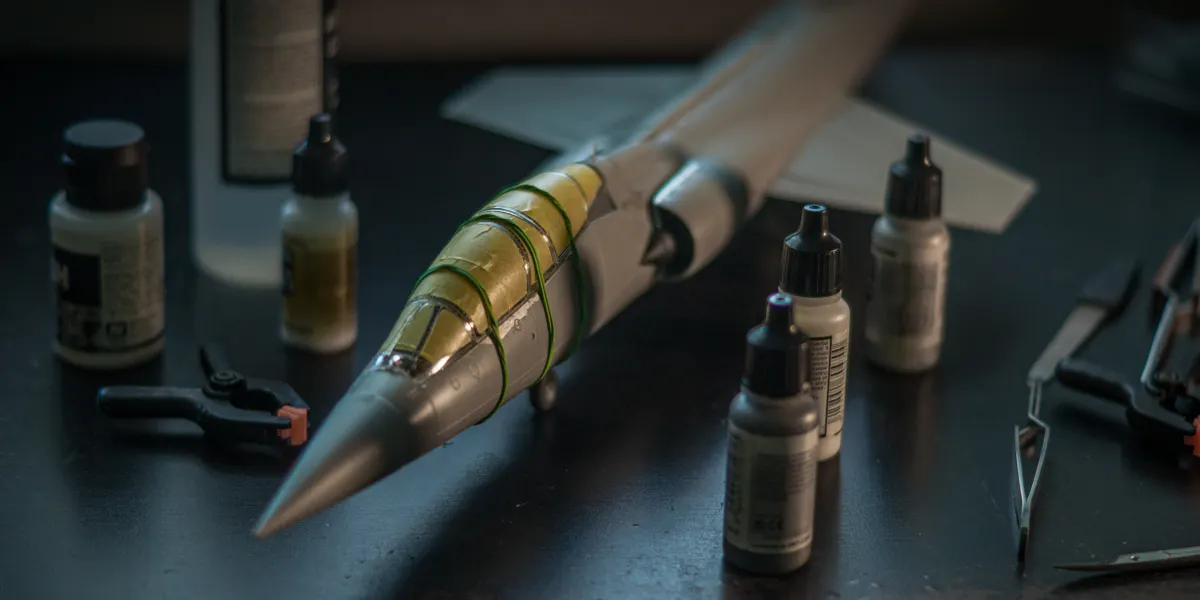
Zenithal priming (also called a zenithal highlight, or just "a zenithal") paints the light onto a model before any colour goes on. You prime the whole model dark, then spray a lighter primer from above, then a white one from almost straight overhead. The top surfaces catch the light colours and the undersides stay dark, as if the model stood under a lamp. Every colour you paint over it afterwards inherits that shading for free.
All you need is two or three primers in black, grey and white. Here they are, with prices from the shops we track in your market:
Citadel (Warhammer Paints) · Spray
What zenithal priming is, and why it works
"Zenith" is the point in the sky directly overhead. A zenithal primer imitates light falling from there: bright on the head, shoulders and the upper face of every fold, darker on anything that faces down or sits in a recess. Done well, a grey model fresh from the primer already reads as lit, and you can see in the primer which areas will carry the highlights later.
It helps in three ways:
- It shows you the light. Even if you paint over it with opaque paint, you now know exactly where the highlights belong. Many painters take a photo of the zenithal before they start.
- It feeds translucent paint. Citadel Contrast, Army Painter Speedpaint and Vallejo Xpress Color are see-through by design. Over a zenithal, they come out shaded and highlighted in one coat. See the best contrast paints for the three ranges side by side.
- It is fast. A whole squad can go through all three stages in one spraying session, which no brush technique matches.
Spray can or airbrush?
Spray cans are the cheap and quick route, and most people's first zenithal. Aerosols lay down a wide cone, so the gradient comes out soft and broad. That suits infantry, monsters and anything with big cloaks or muscle. You need dry, mild weather and somewhere ventilated, because an aerosol behaves badly in cold or damp air. The spray primer guide covers the cans in detail, and the spray primer shelf compares every can we list.
An airbrush gives you a tighter, more controlled light. You can aim the white at a face or a single shoulder pad, and spray indoors in winter. You need an airbrush, a compressor and an airbrush-ready primer such as Vallejo Surface Primer, which comes in a dropper bottle ready to spray. The best airbrush for miniatures guide compares the airbrushes, the airbrush compressor guide covers the other half of the kit, and the airbrush shelf lists every airbrush we price.
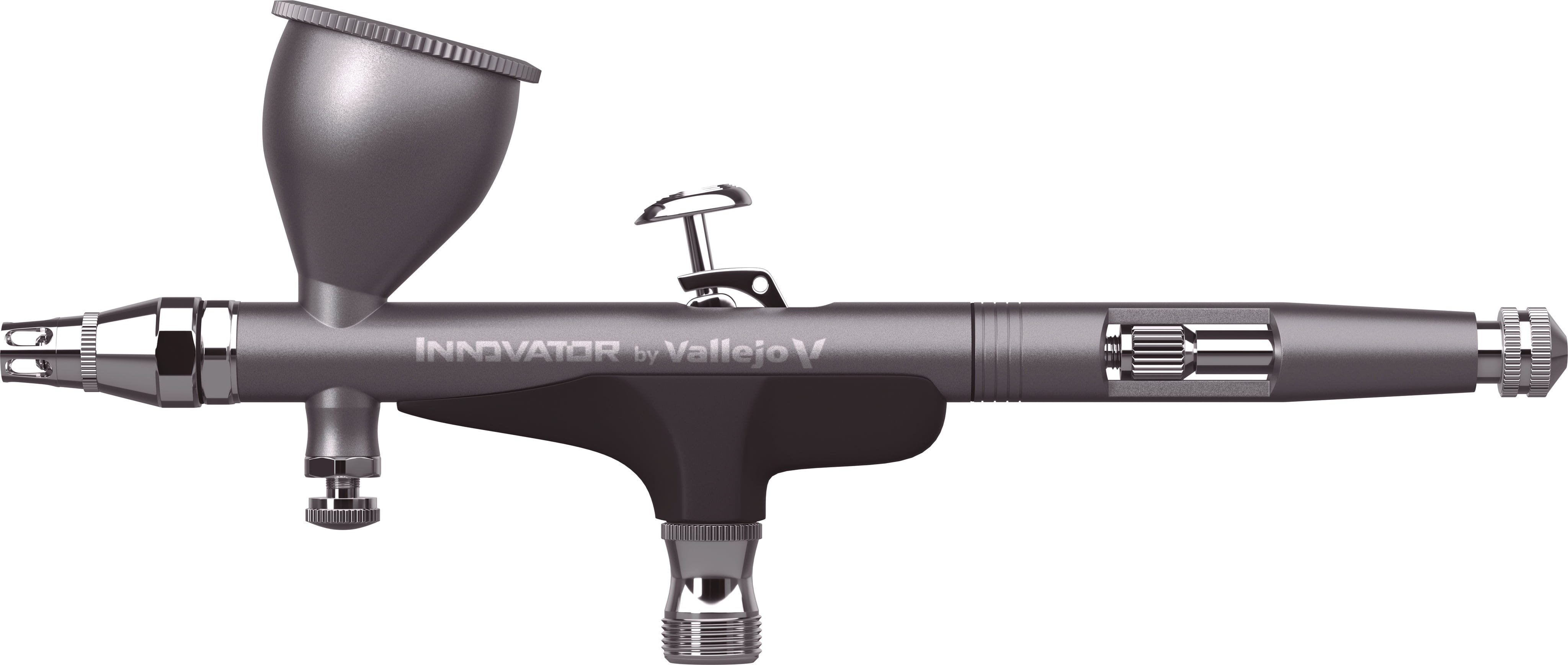

For an airbrushed zenithal, bottled primers in the same three shades:
Vallejo · Surface Primer
Vallejo · Surface Primer
Vallejo · Surface Primer
AK Interactive
AK Interactive
AK Interactive
How to zenithal prime, step by step
- Prime the whole model black. Cover every surface, underneath included, in two light passes rather than one heavy one. This is your shadow. Let it dry fully.
- Spray grey from about 45 degrees above. Hold the can or airbrush above the model and angled down, and turn the model as you go so every side gets the grey from the same height. The undersides should stay black.
- Spray white from almost directly above. A short, light burst from overhead, sometimes slightly in front. The white should land on the top of the head, the shoulders and the upper edge of each raised surface, and nowhere else.
- Check it at arm's length. The model should read as light from above in three tones. If it looks all grey, the white was too heavy or too wide: add a thin black pass from below to recover the shadows.
- Paint over it. Thin colour lets the zenithal show through; opaque colour hides it but keeps the map of where highlights go.
Two-tone version. Black then white, missing out the grey, is quicker and gives a harsher light. It suits a dramatic, high-contrast look and is a good first attempt with a spray can.
Coloured version. Prime in a dark colour of the army's scheme, then go lighter with grey and white. The finished colour comes out richer than over a plain black base.
Zenithal vs slapchop
They give a similar result by different routes. A zenithal applies the light with spray, so it is smooth and covers smooth panels well. Slapchop applies the light with a drybrush, so it is grainy and only catches raised texture, but needs no can or airbrush. On a vehicle, a power-armoured squad or anything with big flat surfaces, use the zenithal: a drybrush leaves streaks there. On fur, rock, cloth and muscle, either works, and slapchop adds texture you may want. Many painters combine them: a sprayed zenithal first, then a light white drybrush over the textured areas.
Paints to put over a zenithal
Translucent one-coat paints are the natural partner. Over the light areas they stay pale and bright; in the dark recesses they pool and darken. Some of the most used Contrast, Speedpaint and Xpress Color colours:
Citadel (Warhammer Paints)
Citadel (Warhammer Paints)
Thinned washes and glazes do the same job more slowly, and a wash over a zenithal is a fast way to finish rank-and-file troops.
Common mistakes and fixes
- The white goes everywhere. The commonest fault. Use short bursts, from further away, and stop sooner than feels right. The white belongs only on the top surfaces.
- Grainy, rough primer. With a can, you are too far away or the air is too warm or humid, so the paint dries before it lands. With an airbrush, the primer is too thick or the pressure too high. See thinning paints.
- Detail filled in. Three coats of primer on top of each other add up. Keep each stage light; the grey and white only need to tint the surface, not cover it.
- No contrast after painting. An opaque basecoat over the whole model hides the zenithal. Use translucent paint, or thin your paint so the light shows through.
Questions people ask
What is zenithal priming? Priming a model dark all over, then spraying lighter primer from above so the top surfaces are bright and the undersides stay dark. It puts the shading in before the colour.
Can I zenithal prime with a spray can? Yes. Spray black all over, then grey from about 45 degrees above, then a short burst of white from overhead. It gives a softer gradient than an airbrush and needs dry weather.
Do I need an airbrush to zenithal? No. An airbrush gives more control and works indoors, but cans or even a drybrush (that is slapchop) do the job.
What is the difference between a zenithal and a zenithal highlight? They are the same thing. "Zenithal highlight" names the effect, "zenithal priming" names doing it with primer.
Should I varnish a zenithal before painting? No. Paint straight over the dry primer. Varnish the finished model at the end.
Primers for a zenithal
Three primers in black, grey and white are all a spray-can zenithal needs.
We earn a small commission from qualifying purchases at no extra cost to you.