
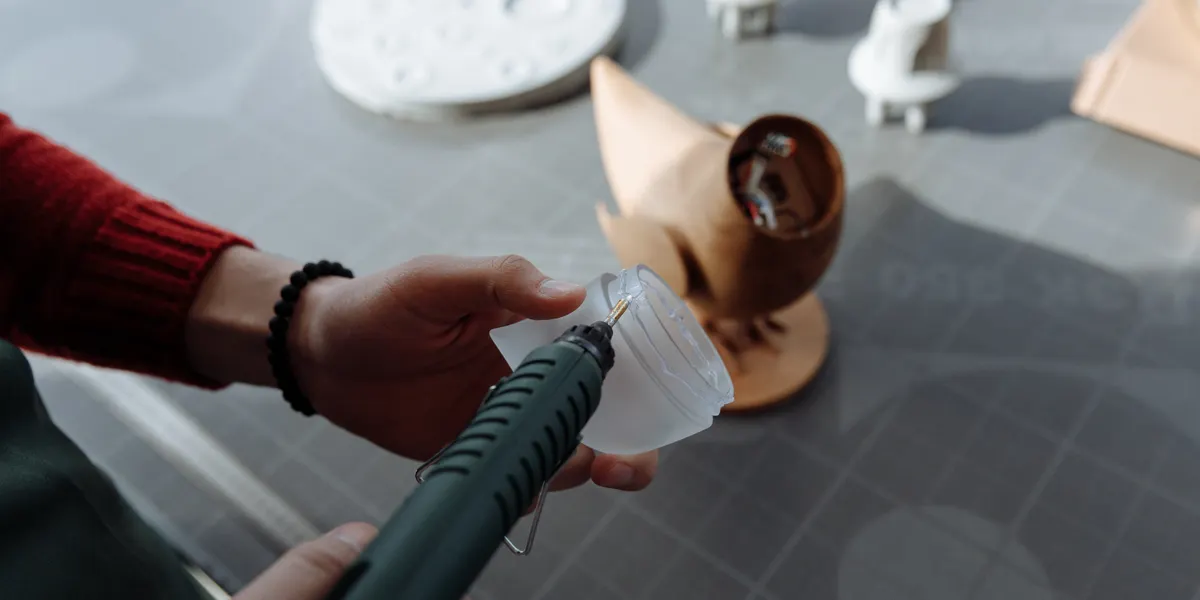
The best glue for PLA is superglue (cyanoacrylate, or CA glue). It bonds PLA in seconds, works on PETG, ABS and resin prints too, and a thick or gel version fills the small gaps between printed parts. For big, heavy or load-bearing joins, use a two-part epoxy instead. These superglues are sold by the shops we track:
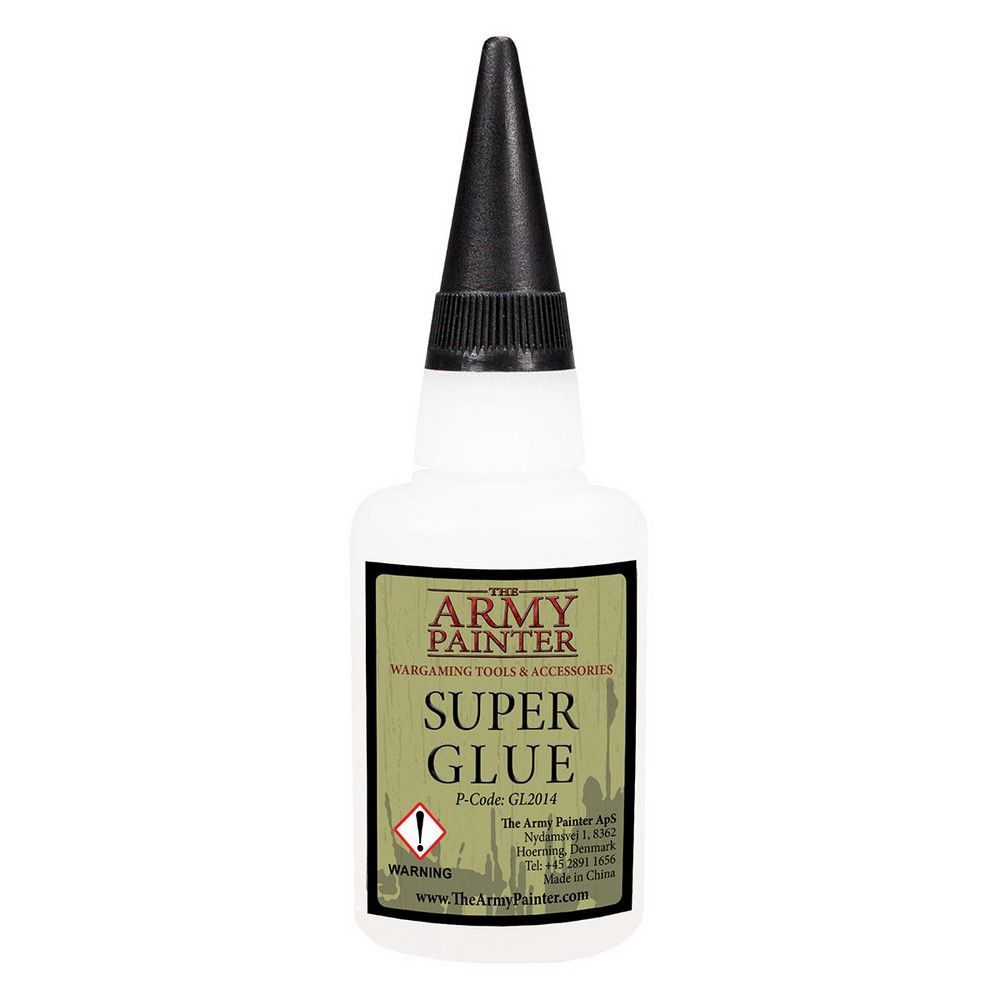
Medium-thickness cyanoacrylate with a precision tip, 24g
Army Painter
The shops we compare in this market do not sell glue yet, so the glue cards on this page are empty here. Superglue and two-part epoxy from a hardware shop do the same jobs; look for "cyanoacrylate" on the label. The print-bed glue and resin sections further down have products sold in this market.
Every glue we price is on our glues shelf, in your currency.
Glue for PLA at a glance
| Glue | Bonds PLA? | Sets in | Best for |
|---|---|---|---|
| Superglue, thin | Yes | Seconds | Tight-fitting joins; wicks into a seam already held together |
| Superglue, medium or gel | Yes | Seconds to a minute | Most printed parts; fills small gaps; time to line parts up |
| Superglue plus accelerator | Yes | Instantly | Holding a part without clamping |
| Two-part epoxy | Yes | Minutes (as labelled) | Big, heavy or load-bearing joins; filling larger gaps |
| Hot glue | Weakly | Under a minute | Tacking terrain together quickly; not a strong bond |
| Plastic cement (poly cement) | No | Not applicable | Polystyrene kits, not PLA |
| Acetone | No | Not applicable | Welds ABS and ASA, not PLA |
Superglue for PLA
Superglue is the default for PLA because it is quick, strong enough for most models and terrain, and easy to find. It comes in thicknesses, and each has its job:
- Thin superglue runs into a seam by capillary action. Hold the parts together first, then touch the bottle to the join. It needs a tight fit.
- Medium is the general-purpose one: apply it to one face and press the parts together.
- Thick or gel stays where you put it, fills the small gaps that printed parts often have, and gives you a few seconds to line things up.
Some superglues are sold for 3D prints in particular. 3DJake lists ARKA's Kraftprotz superglues as made for PLA, ABS, PETG and TPU prints, and VMS names its Flexy 5K 3D glue for 3D prints.
How to glue PLA with superglue
- Dry fit the parts and sand or file anything that stops them meeting flat.
- Scuff both faces lightly with sandpaper. A rough surface gives the glue more to grip than a smooth printed skin.
- Clean off the dust. Grease from your fingers weakens the bond too.
- Glue one face sparingly. More glue is not stronger: a thick layer of superglue takes longer to cure and is more brittle.
- Hold the parts for the time on the label, or set the glue instantly with an accelerator.
An accelerator (or activator) is a spray or brush-on liquid that cures superglue on contact. It is the way to fix a part you cannot clamp, or to set a fillet of thick glue at once.
Epoxy for big or load-bearing joins
A two-part epoxy is mixed from a resin and a hardener, and cures by chemical reaction rather than with moisture from the air as superglue does. It is slower, but it fills larger gaps and makes a tougher join than superglue, so it is the glue for a large terrain piece printed in sections, a heavy model on a thin joint, or a prop that will be handled. Mix the two parts in the ratio on the pack, and clamp or tape the parts until it sets.
Filling gaps as you glue
Superglue alone will not bridge a wide gap. Sprinkle a superglue filler powder into the wet glue and it sets hard almost at once, building up the joint so it can be sanded flush. Some makers sell the glue and powder together as a "liquid weld" kit. Our sanding and filling guide covers sanding the join smooth afterwards.
Hot glue for terrain
Hot glue is quick for tacking terrain pieces to a board, fixing foam to a print, or holding parts while a stronger glue cures. It does not bond as strongly to smooth PLA as superglue or epoxy, and a hot nozzle can soften thin PLA, so keep it to jobs that do not carry weight.
What does not work on PLA
- Plastic cement (poly cement, "plastic glue") works by melting polystyrene, the plastic most miniature kits are made of. It does not dissolve PLA in the same way, so it gives a weak join or none. Keep it for kits; our plastic glue guide covers it.
- Acetone welds ABS and ASA by softening the surface of both parts. PLA does not dissolve in it.
- PVA (white glue) is for paper, wood and basing materials. It grips smooth plastic poorly.
Glue for the print bed
If you searched for PLA glue because prints will not stay on the bed, that is a different product. A bed adhesive is a glue stick or a liquid spread thinly on the build plate: it helps the first layer grip while printing and lets the print release once the plate cools, and on a smooth plate it stops PETG bonding too hard. It is not for joining parts. Our textured vs smooth PEI guide covers when a plate needs one.

Liquid bed adhesive for PEI build plates: helps the first layer stick and prints release when the plate cools · 2 bottles
ELEGOO
Glue for PETG, ABS, TPU and resin prints
- PETG: superglue or epoxy. Its glossy surface benefits from a scuff with sandpaper before gluing.
- ABS and ASA: superglue and epoxy both work, and acetone welds ABS and ASA parts to each other. Compare them in our PLA vs ABS and ASA vs ABS guides.
- TPU: flexible prints need a glue that flexes. Some superglues are sold as flexible, such as Everglue's High-Flex.
- Resin prints: superglue, once the print is fully cured. Another common method is a small dab of the same printing resin in the joint, cured with a UV torch or in a cure station.

Combined UV curing and IPA/water washing station for resin prints, current flagship model
ELEGOO
Superglue safety and clean-up
Superglue bonds skin in seconds, so keep a debonder nearby, and work with the window open: the fumes can irritate eyes and noses. Keep it away from children, keep it off cotton and wool (which can make it heat up quickly), and follow the label. A debonder also cleans glue off a print's surface before painting.
Once the parts are joined, see how to paint 3D prints for priming and painting them. To work out what a large printed piece costs in filament before you glue it together, use our 3D print cost calculator; the filament temperature chart has the print settings.
Questions
What is the best glue for PLA?
Superglue (cyanoacrylate). A medium or gel superglue suits most printed parts, and a two-part epoxy is better for big, heavy or load-bearing joins.
Does super glue work on PLA?
Yes. It bonds PLA in seconds. Scuff and clean both faces first and use a little glue rather than a lot.
Can you use plastic cement on PLA?
Not well. Plastic cement melts polystyrene, which is what most miniature kits are made of; it does not dissolve PLA in the same way.
What is the strongest glue for 3D prints?
For most joins, a two-part epoxy makes a tougher bond and fills larger gaps than superglue, at the cost of a longer cure.
Can you glue PLA with acetone?
No. Acetone welds ABS and ASA, not PLA.
What glue do you put on the print bed?
A glue stick or a liquid bed adhesive, spread thinly on the build plate. It helps the first layer stick and the print release when the plate cools. It is a different product from the glue that joins printed parts.
How do you glue resin prints?
With superglue once the print is fully cured, or with a dab of the printing resin cured under UV light.
We describe the conventional methods and the makers' published descriptions, and compare prices at the shops we track; we have not used these glues ourselves.