
If you have an enclosed printer and the piece will sit in sunlight or heat, print it in ASA. Prusa calls ASA a successor to ABS that is "more UV resistant, warps less, and doesn't smell as much", and eSUN's figures put its heat resistance well above ABS. ABS still makes sense for tough parts kept indoors and for acetone smoothing. Both need an enclosure. These are 1 kg spools of each, in black, white and grey, from brands several of the shops we track sell:

UV- and weather-resistant ASA filament for outdoor parts · 1kg
ELEGOO

ASA filament: UV- and weather-resistant, prints like ABS · 1kg
QIDI Tech

ABS filament: tougher and more heat-resistant than PLA, needs a heated bed and ideally an enclosure · 1kg
ELEGOO
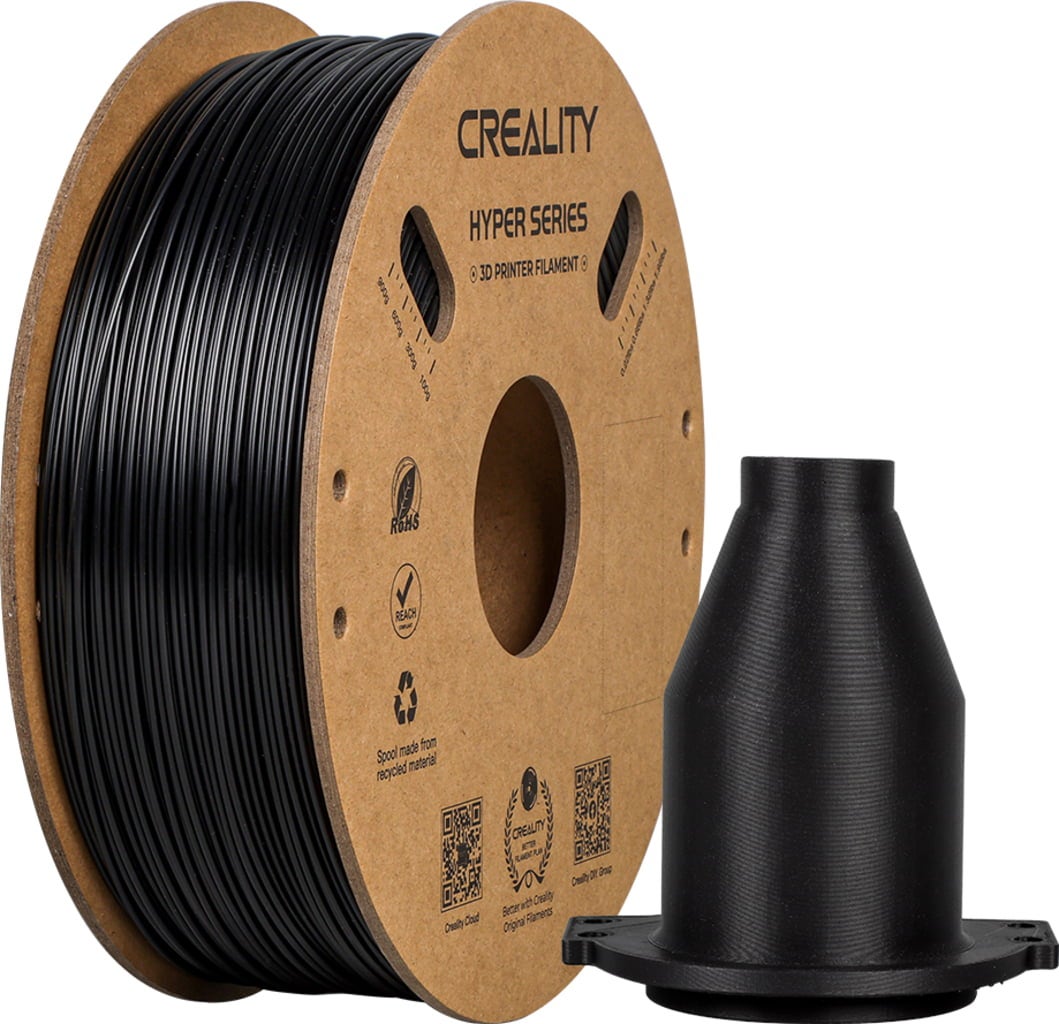
ABS-family filament: tougher and more heat-resistant than PLA, needs a heated bed and ideally an enclosure · 1kg, 1.75 mm
Creality
Supply is thin here: the shops we track in this market sell only a handful of ASA spools, mostly Elegoo and QIDI. ABS is easier to find.
Both are on the ABS and ASA shelf, priced per kilo in your currency. Settings for sixteen filaments are side by side in our filament temperature chart.
ASA vs ABS at a glance
| ASA | ABS | |
|---|---|---|
| Nozzle temperature (eSUN) | 250-280 °C | 255-275 °C |
| Bed temperature (eSUN) | 90-110 °C | 95-110 °C |
| Part cooling fan (eSUN) | 0-30% | Off |
| Enclosure | Yes: eSUN and Prusa both call for one | Yes: eSUN and Prusa both call for one |
| Heat distortion (eSUN) | 96 °C | 78 °C |
| Impact strength, Izod (eSUN) | 20.1 kJ/m² | 26.5 kJ/m² |
| UV and outdoors | Prusa: "suitable for outdoor use, due to its high UV light and temperature resistance" | Not described as UV resistant by either maker |
| Warping and smell | Prusa: warps less than ABS and smells less | Prusa: warping and toxic fumes are the main disadvantages |
| Smoothing | Not described by either maker | Smooths with acetone vapour (Prusa) |
| Drying | 80 °C for 4 hours (Prusa) | Not stated by either maker |
| Best for | Terrain, signs and storage that sit in sun or heat | Tough indoor parts, acetone-smoothed finishes |
The ASA figures are from eSUN's ASA+ page and the ABS figures from its ABS page. The Prusa lines are from its ASA and ABS articles and its drying table. Prusa gives ASA "temperature resistance (up to 93 °C)". Start from your spool's label.
Why ASA for sun and heat
ASA's advantage is the weather. Prusa says it is "suitable for outdoor use, due to its high UV light and temperature resistance", and eSUN measures its ASA+ heat distortion at 96 °C against 78 °C for its ABS. That suits garden gaming tables and outdoor terrain, a display on a sunny windowsill, signs and labels for a shop or club, and storage that lives in a hot car or a summer loft.
It is also kinder to print. Prusa says ASA warps less than ABS and does not smell as much, though it still "releases potentially dangerous fumes during printing", so it wants the same ventilated room.
ASA filament: UV- and weather-resistant, prints like ABS · 1kg
QIDI Tech
Where ABS still wins
On eSUN's own figures, ABS has the higher Izod impact strength of the two: 26.5 kJ/m² against 20.1. And Prusa notes ABS "can be sanded wet and dry and smoothed with acetone fumes", which melts layer lines into a gloss that suits a smooth vehicle hull. For a tough part that lives indoors, or a finish you plan to vapour-smooth, ABS is the one.
Both need an enclosure
eSUN's printing recommendation for both is enclosed-chamber printing, and Prusa says each should be printed inside an enclosure, in a well-ventilated room but without a draft across the print. On an open printer neither is a good choice. If yours is open and you need something tougher and more heat-tolerant than PLA, print PETG: see PETG vs ABS.
Or add an enclosure: on an open printer it is usually a fold-up tent that sits over the whole machine, and our 3D printer enclosure guide covers the choices. Measure the printer, including the spool holder and the bed's full travel, before choosing a size; the Elegoo one is made for its Neptune printers.

3D printer enclosure · Small
Creality

Fold-up enclosure tent that keeps heat in and draughts out for ABS/ASA printing on a Neptune · Fits Neptune 2/2D/2S/3/3 Pro/4/4 Pro
ELEGOO
Painting ASA and ABS
Both take acrylic paint over a primer made for plastics. If a painted piece is going outdoors, the paint and varnish need to cope with sunlight too: the ASA underneath will not fade, but the paint on it can. To see what a print costs in either material, our 3D print cost calculator prices it from the spools sold in your region.
Other filament comparisons
- Best filament for terrain and miniatures: every material in one table, with the spools to buy
- PLA vs ABS: the easy filament against the tough one
- PETG vs ABS: toughness without the enclosure
- PETG vs PLA: which of the two open-printer filaments for terrain
- PLA vs PLA+: what the plus buys you
Questions
Is ASA better than ABS?
For anything in sunlight or heat, yes. Prusa says ASA is more UV resistant, warps less and smells less than ABS, and eSUN's ASA+ has a heat distortion temperature of 96 °C against 78 °C for its ABS. ABS has the higher impact strength on eSUN's figures and can be acetone-smoothed.
Does ASA need an enclosure?
Yes. eSUN recommends enclosed-chamber printing for ASA, and Prusa says the printer should be inside an enclosure, the same as for ABS.
What temperature do I print ASA at?
eSUN publishes 250-280 °C at the nozzle and a 90-110 °C bed, with the part fan at 0-30%. Prusa runs its own ASA at 260 °C on a 105-110 °C bed.
Is ASA good for outdoor wargaming terrain?
It is the filament its makers recommend for outdoor use, for its UV and heat resistance. Protect the paint on top with a varnish suited to sunlight.
We compare the makers' published settings and the prices at the shops we track; we have not printed with these spools ourselves.