
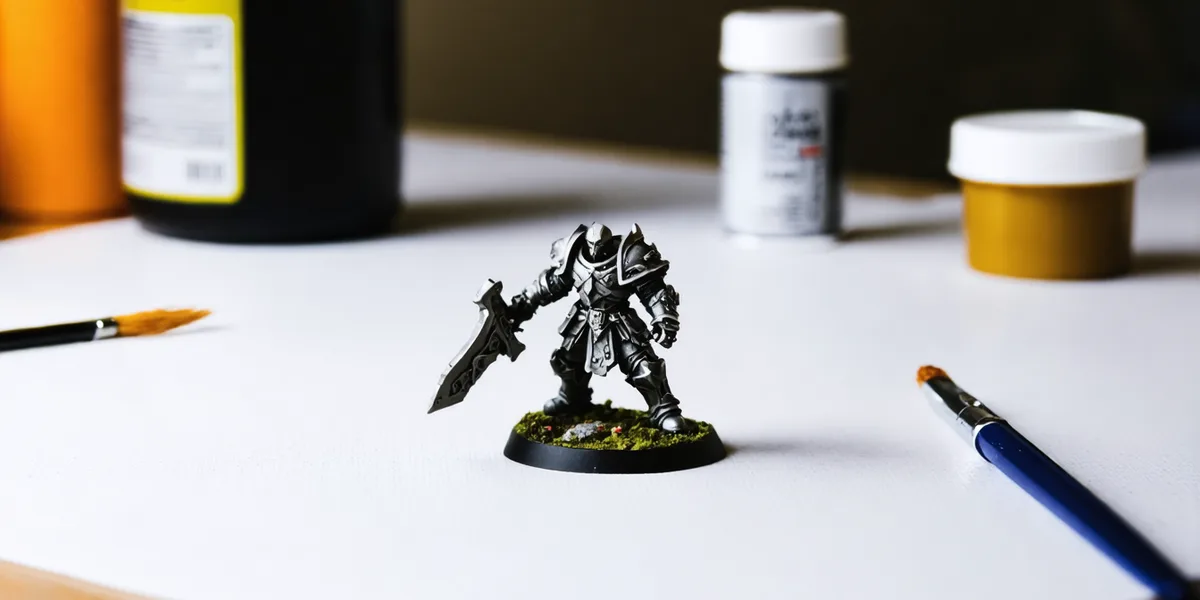
Spray primer is the default way to prime miniatures, and for a whole army on a dry day it is still the quickest. But a spray can needs mild weather, an outdoor space and a batch big enough to be worth shaking the can for. A brush-on primer needs none of those. It is a bottle of primer you paint on with a brush, at your desk, in any weather.
The brush-on primers most painters use, with prices from the shops we track in your market:
Army Painter
Vallejo · Surface Primer
Vallejo · Surface Primer
Vallejo · Surface Primer
AK Interactive
Green Stuff World
Every primer we list, bottle and can, is on the primer shelf.
When a brush-on primer wins
- Winter, damp or heat. Aerosols spit, frost or dry gritty in cold, humid or very hot air. A brush-on primer does not care about the weather.
- No outdoor space. Spraying indoors is unpleasant and unsafe without a spray booth. A brush-on primer is as safe to use as ordinary acrylic paint.
- One or two models. Shaking and cleaning a can for a single character is a waste; a few drops from a bottle is enough.
- Touching up. A scratch, a missed spot under an arm, a part glued on after priming. A spray would mean redoing the area; a brush-on primer goes exactly where you need it.
- Airbrush owners. Many brush-on primers, Vallejo Surface Primer among them, are also made to go through an airbrush, which gives you a spray-thin coat indoors.
When a spray can still wins
- A big batch. Twenty infantry primed with a can take minutes. By brush, they take an evening.
- Coverage of awkward shapes. A spray reaches into deep folds and under arms that a brush can miss.
- A coloured primer as a basecoat. Spray ranges such as Army Painter's Colour Primer and Colour Forge are deep in army colours. See the spray primer guide, which keeps the "best spray primer" question, and the spray shelf.
- A zenithal. Layering black, grey and white from different angles is what sprays and airbrushes do best.
How to brush on primer without losing detail
Brush-on primers are thicker than paint and dry fast, which is what makes them grip, and what makes a careless coat fill in detail.
- Wash the model first. Mould release left on plastic and especially resin stops any primer gripping. Warm water and a drop of washing-up liquid, then a rinse and a full dry.
- Shake the bottle hard. Primer settles more than paint. Many bottles have an agitator ball; if not, see the paint shaker guide.
- Use an old, soft brush, medium sized. Primer is hard on bristles; brush care covers cleaning one after.
- Thin coats. Drop a little primer on a palette, brush a thin coat over the model, and let it dry. It may look patchy. That is fine.
- Second coat once dry. Two thin coats cover better than one thick one and keep detail crisp.
- Leave it to cure before painting. Check the bottle for the maker's time; overnight is a safe default.
A primer that is too thick to brush smoothly can be thinned a little with water or the maker's thinner, but go carefully: too much and it loses its grip.
The brush-on primers compared
Vallejo Surface Primer is one of the most widely stocked brush-on primers in the hobby. It is polyurethane-based, comes in dropper bottles in black, grey, white and a long list of colours, and is made to be brushed or airbrushed.
Army Painter Brush-On Primer is a dropper-bottle primer from the Warpaints Fanatic line, designed for brushing straight from the bottle.
AK Interactive Primer (3rd Generation) is AK's acrylic primer, sold in black, grey, white and several military colours.
Green Stuff World Primer comes in black (matt or gloss), grey, white, red and green.
Citadel does not sell a brush-on primer. Games Workshop's primers are its spray cans; on a small job, many Citadel painters use a thinned base paint such as Abaddon Black or White Scar instead. That is a basecoat, not a primer, and grips less well on bare plastic.
Vallejo's Mecha Primer, sold for robot and vehicle kits, is brushed or airbrushed the same way, and comes in the same three shades:
AK Interactive
AK Interactive
Green Stuff World
Questions people ask
Is brush-on primer as good as spray? For grip, yes, if the model is clean and the coats are thin. It is slower on a big batch and needs more care in deep recesses.
Can I brush on spray primer? Not directly from the can. Some painters spray a little into a cup and brush it, but it dries in seconds and is solvent-based. Use a brush-on primer instead.
Do I need to prime miniatures at all? Paint goes on bare plastic, but it chips off much faster. Primer is the layer that grips the plastic and gives the paint something to hold.
What is the best brush-on primer for miniatures? Vallejo Surface Primer is one of the most widely stocked and works by brush or airbrush. Army Painter's Brush-On Primer is the simplest to use straight from the bottle.
How long should brush-on primer dry before painting? Follow the maker's time on the bottle. Overnight is safe for any of them.
Brush-on primer
A dropper bottle of primer lets you prime at your desk in any weather.
We earn a small commission from qualifying purchases at no extra cost to you.