
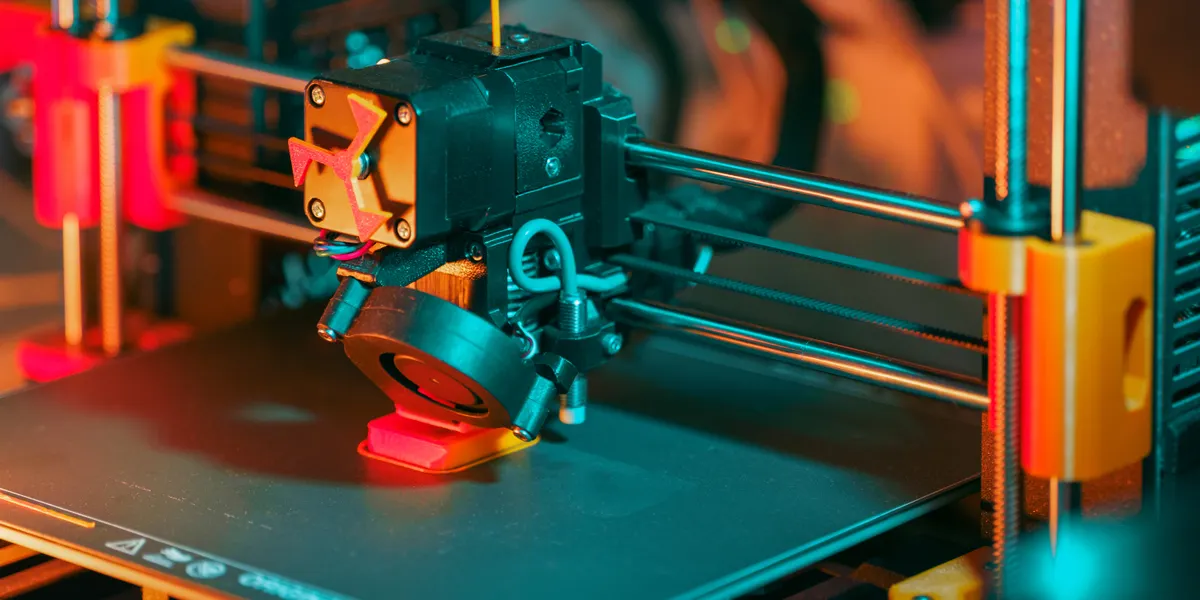
Buy a resin printer if you want to print miniatures: it prints the detail on faces, hands and armour that a 28 mm model needs. Buy an FDM (filament) printer if you want terrain, scenery, bases and storage: it prints bigger pieces and needs no chemical clean-up. These are one of each, sold by the shops we track in all five markets:

9K, 7-inch monochrome LCD resin printer, the upgraded Mars 5 model
ELEGOO

12K, 10-inch monochrome LCD resin printer, the upgraded Saturn 4 model
ELEGOO

Direct-drive high-speed FDM filament printer with auto-levelling, upgraded Neptune 4 model
ELEGOO

Enclosed CoreXY FDM printer (multi-colour with the separately sold CFS unit) · 260 x 260 x 260 mm
Creality


Every printer we track, resin and filament, is on the 3D printers shelf.
Resin vs FDM at a glance
| Resin (MSLA) | FDM (filament) | |
|---|---|---|
| How it prints | A UV screen cures liquid resin one layer at a time | A hot nozzle lays down melted plastic line by line |
| Detail | Set by the pixel size: 14 to 35 µm on the printers in our resin guide | Set by the nozzle: 0.4 mm as standard, 0.2 mm for finer work |
| Build size | 7-inch printers: about 153 x 87 x 165 mm (Photon Mono 4) | 220 x 220 x 250 mm on the Ender 3 V3 SE; 256 mm cubed on the Bambu Lab P2S |
| Material | Resin bottles: standard, ABS-like, water-washable | Spools: PLA, PETG, TPU and more |
| After printing | Wash (IPA or water), dry, UV cure, remove supports | Remove supports; nothing to wash |
| Handling | Liquid resin is a chemical: gloves and care with wash liquid | Hot nozzle and bed, but no liquids |
| Best for | Infantry, characters, busts, small detailed parts | Terrain, buildings, bases, vehicles, storage |
Build sizes are from 3DJake's listings for the Anycubic Photon Mono 4 and Creality Ender 3 V3 SE, and from Bambu Lab's P2S specifications. Our resin printer guide lists every pixel size.
Why resin wins for miniatures
On a resin printer the smallest feature is one pixel on the screen, and the printers we compare state pixels from 14 to 35 µm. A filament printer's line is as wide as its nozzle: 0.4 mm on the standard nozzle, 0.2 mm on a fine-detail one. At 28 mm scale, eyes, fingers and the edge of a cloak are features smaller than a filament line, which is why resin is the default for gaming miniatures.
Why FDM wins for terrain
A filament printer prints much bigger pieces in one go, and a filament print needs no wash and no curing, so a ruin or a stack of crates goes from the printer to the primer. For terrain, PLA and PETG are the two filaments to know; our PETG vs PLA guide compares them.

Tougher, less brittle PLA+ filament · 1kg
ELEGOO

PETG filament: tougher and more heat-tolerant than PLA, easy to print · 1kg
ELEGOO
ABS-Like Resin V3.0 resin for 3D printing · 1kg
ELEGOO

General-purpose UV printer resin: the baseline chemistry, not water-washable · 1000g
ELEGOO
Mess and safety
Resin printing has more steps and more to handle carefully. Phrozen's guidance for standard resin is that it needs "gloves, and protective equipment to safely handle the chemicals involved", and it warns against pouring uncured wash water down the drain. A filament printer has a hot nozzle and bed, but nothing to wash, cure or dispose of. If the resin workflow puts you off, water-washable resin removes the alcohol from it: see the resin guide.
Running costs
- Resin: resin by the bottle, isopropyl alcohol (or water) for washing, release film for the tank, and a wash and cure station or a UV lamp. See curing resin prints.
- FDM: filament by the spool, an occasional nozzle and build plate, and dry storage. See nozzle sizes, build plates and filament storage.
Resin vs filament 3D printer: which to buy
A filament printer is an FDM printer: the two names mean the same machine. So the choice comes down to four questions.
- What will you print? Miniatures and busts: resin. Terrain, buildings, vehicles, bases and storage: filament. Both: many hobbyists end up with one of each.
- Where will it live? Resin needs a space you can ventilate, a surface you do not mind spills on, and room for a wash and cure station. A filament printer needs a shelf and a power socket.
- How much finishing will you do? A resin print is washed, cured and has its supports removed before it can be primed. A filament print comes off the plate ready for support removal and a little sanding: see sanding and smoothing 3D prints.
- What will it cost to run? Resin is sold by the bottle and filament by the spool; our 3D print cost calculator prices a print in either from the prices the shops in your market charge.
If you choose resin, budget for a wash and cure station alongside the printer: it washes the print and cures it under UV in one unit. Our step-by-step guide to printing miniatures walks through the whole resin workflow.

Combined UV curing and IPA/water washing station for resin prints
ELEGOO
Either way, the print is painted the same way once it is primed: see how to paint 3D prints. Settings for every common filament are in the filament temperature chart.
Resin printer vs 3D printer
Both are 3D printers. When people say "3D printer" they usually mean a filament (FDM) machine; a resin printer is the kind built for small, detailed parts. Our best 3D printer for beginners guide covers filament printers.
Questions
Is resin or FDM better for miniatures?
Resin. Its detail is set by a screen pixel of 14 to 35 µm on the printers we compare, much finer than a 0.2 to 0.4 mm filament line.
Is resin or FDM better for terrain?
FDM. It prints larger pieces and needs no washing or curing.
Can one printer do both?
A filament printer can print terrain and passable miniatures; a resin printer can print terrain details but not big buildings in one piece. Many people who print a lot own one of each.
Should I buy a resin or filament 3D printer?
Resin if you mainly want to print miniatures; filament if you mainly want terrain, bases and storage. A filament printer also needs less space and no washing or curing.
Is resin printing more dangerous than FDM?
It involves liquid chemicals. Phrozen's guidance is gloves and protective equipment for standard resin, and never pouring wash water down the drain. A filament printer has no liquids to handle.
We compare what the printer makers and the shops we track publish, and their prices; we have not printed on these machines ourselves.